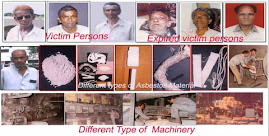
In 2005, at the age of 65, Narayan Mehra was diagnosed with tuberculosis and asbestosis, a chronic inflammatory medical condition that affects the lungs, causes shortness of breath, and puts a person at risk of cancer. Mehra had worked 22 years in a power plant in Ahmedabad. It took him another three years, in 2008, to get a written assurance of Rs 80,000 as compensation from his employer. He is yet to receive the money. Raghunath K Manvar of the Occupational Health and Safety Organisation, which fights for the workers’ rights to a safe working environment, visits the power plant’s office every day to help Narayan collect the promised sum. “They keep delaying, giving some excuse or the other,” says Raghunath.
Asbestos is a known industrial hazard. Its ill-effects on health are well-documented and its use is banned in many countries (such as the European Union, Chile, Iceland, Saudi Arabia, Brazil). For one thing, it has been identified as a cancer-causing agent. The Asbestos Cement Product Manufacturers Association argues that the use of chrysotile variety of asbestos under “controlled conditions is safe for workers, environment and the general public”. However, former scientific adviser to the European Commission Barry Castleman, in a 2003 paper, writes that “controlled use” of this substance has been discredited worldwide. The same year, Union minister Sushma Swaraj said in the Rajya Sabha, “Studies by the National Institute of Occupational Health, Ahmedabad, have shown that long-term exposure to any type of asbestos can lead to asbestosis, lung cancer and mesothelioma.”
However, in India, asbestos is still widely used (in 2006 the country imported 3,06,000 tonnes). Against this backdrop, the NIOH’s latest study on the hazards of using chrysotile asbestos gains significance. The draft report obtained early this year comprises a survey of six sites where asbestos is used. It concluded that the fibre levels in all the workplaces studied were below national and international standards and workers from five of the sites were “found to be in a good state of health”.
This study has been partly funded by the asbestos industry itself. A letter dated April 24, 2006, from the under secretary in the department of chemicals and petrochemicals, ministry of chemicals and fertilisers, to the director of NIOH reads: “The government will contribute Rs 43.66 lakh, while the Asbestos Cement Product Manufacturers Association would contribute Rs 16 lakh towards the total cost of the study.”
How objective can such a study be? Occupational health experts and others have serious concerns over its status.
Dr V Murlidhar, an occupational health specialist who has worked with the United Nations, says the draft does not quote NIOH’s own study on asbestosis among workers. The 2005 study by S K Dave and W S Beckett concludes that asbestos-related diseases are expected among workers exposed to asbestos while mining, milling and manufacturing as well as in those with secondary exposures to materials containing asbestos.
Benedetto Terracini, retired professor of cancer epidemiology at the University of Torino (Italy), asks: “On what basis do the authors state that ‘… the possibility of safe use of chrysotile asbestos … happens to be an unresolved issue’? Many asbestos experts would not endorse such a statement.” He says that the referred literature also does not mention relevant findings such as the consistent evidence that all forms of asbestos are carcinogenic for laboratory animals. More than 30 years ago, he writes, all types of asbestos were classified as carcinogenic to man by the International Agency for Research on Cancer.
Murlidhar, whose earlier study, ironically, was quoted by the NIOH report, says the numbers of Indian workers affected by asbestosis are less than the international norm because sick workers mostly leave the factory. Castleman wondered why some firms that participated in the study sent in people who had worked less than 20 years. In one firm, the mean age of selected workers is 30, with a mean-job duration of five years. “Not a chance of finding disease in this study,” he says.
Even when the study was proposed there were objections from experts. They advised the government against such a study. They also criticised the method used in the first of the series of studies, conducted in Kolkata.
Dr Murlidhar had written to the Union minister for chemicals and fertilisers that the proposed study would never find a place in a peer-reviewed journal. “If the work cannot have any chance of publication in any peer-reviewed journal, it is meaningless and trash.” He did not receive any reply.
Dr V Ramana Dhara, adjunct professor at the Morehouse School of Medicine and Rollins School of Public Health of Emory University, USA, wrote to the minister that, “No details of where the studies are to be conducted, exposure assessment, sampling methodology, and investigational methods are provided in the proposal.” Neither the proposed NIOH study nor the Kolkata study addresses the issue of lung cancer. He was clear that Indian workers were being needlessly exposed to asbestos. The only prudent solution was to ban its production and use. Dr Ramana never received a reply to his letter.
However, the National Institute of Occupational Health is unimpressed by the contrarian notes. Senior research officer Dr R R Tiwari, who worked on the report, says the institute stands by it. “We conducted a scientific study and whatever we have to say is in that report.” According to him, the report has been sent to the ministry of chemicals and fertilisers. He refused to comment further.
While the debate rages, industry workers continue to face the risk of disease and worse.
July 26 2008
Asha Menon
The New Indian Express
Tuesday, July 29, 2008

Friday, July 25, 2008
White House tries to push changes on asbestos, toxins
Agencies asked to ease safety rules
In its final days in power, the Bush White House is rushing to have federal agencies water down the regulation of hazardous substances, lawmakers and public health experts say. A panel of scientific advisers this week denounced an Environmental Protection Agency plan to quickly alter the way it measures the cancer-causing risk of asbestos, but the thumbs-down doesn't prevent the agency from making the change anyway.
The latest 11th-hour toxic sparring match comes while members of Congress are asking why the Labor Department has sent plans for sweeping changes in how workers are protected from chemical hazards directly to the White House Office of Management and Budget.
Many of the government scientists and physicians in the Labor Department and other agencies who are normally required to weigh in on these kinds of changes say they haven't had a peek at the proposal.
Similar concern has been focused on the firing of John Howard, the popular director of the National Institute for Occupational Safety and Health,
People at EPA headquarters say the rush to have them change the way asbestos hazards are calculated is caused in part to OMB's desire to appease the automotive, mining, construction and chemical industries being sued for harm done by asbestos-containing material they've used or sold.
The 20 experts appointed to the Scientific Advisory Board's asbestos panel were to evaluate the validity of the EPA's plan to change how the toxicity of the six types of asbestos regulated by government differ in danger. The change centered on the EPA's desire to ignore decades worth of what are considered solid studies documenting the actual hazard of the most common type of asbestos -- chrysotile.
Instead, the EPA submitted other studies which, it said, showed chrysotile isn't dangerous and doesn't cause mesothelioma, an almost always fatal cancer, which often garners multimillion-dollar judgments in court cases brought by people sickened or killed by exposure to it.
Lawyers defending corporations against asbestos claims says passage would greatly increase their chances of convincing juries that the asbestos used by their company wasn't dangerous. The Labor Department's current efforts would offer the same benefit to corporations in litigation involving scores of other toxins.
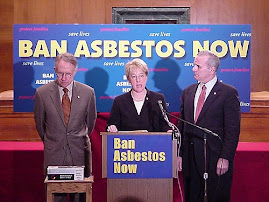
Sen. Patty Murray, who has long fought for a ban on asbestos and better protection for workers, is angered by the EPA action.
"I'd like the political appointees at the EPA to look into the eyes of a mesothelioma patient and say that asbestos isn't dangerous. It appears that this administration is once again putting politics before public health," said the Washington Democrat.
On Monday and Tuesday, more than two dozen witnesses either provided statements or testified before the scientific panel.
"Garbage in, gospel out," said lead-off witness Dr. David Egilman. The occupational medicine specialist explained to the panel that industry-financed studies cited in the EPA report had been proved to have no scientific credibility. "This is another example of how this administration all too often bows to corporate pressure and facilitates regulations that fail to protect the health of both the workers and the public."
The EPA's position was that the new approach was needed to improve assessment of many asbestos-contaminated Superfund sites.
The only non-EPA person to speak in favor of the EPA's plan was Suresh Moolgavkar, an epidemiologist hired by W.R. Grace, which has been charged with contaminating the tiny northwest Montana town of Libby. But while saying that the EPA's efforts were needed, Moolgavkar nevertheless criticized the agency for the weakness of the data it presented.
Dr. Michael Silverstein, a University of Washington clinical professor and occupational health specialist, submitted a 29-page report signed by 87 of the nation's leading public health authorities. The document strongly questioned the EPA attempt to change the risk assessment methods and accuracy of the data the agency used.
"We knew plenty about asbestos. We didn't need more investigations. We didn't need more policy. What we did need was to stop exposures and stop the use of it," said Silverstein, who added that the latest effort by the EPA "just came out of nowhere and is one of a number of questionable things being rushed through at the end of this administration."
The Bush administration has repeatedly taken industry's position on issues involving asbestos and other toxic substances. For almost four years, Bush fought openly for asbestos tort reform to end workers' ability to sue their employers.
"Too much has happened for this not to be a last-ditch effort by the administration to weaken public safety rules, especially for workers," said Silverstein.
Among the recent actions that concern the physician and other public health activists was the firing earlier this month of NIOSH boss Howard, who unlike many of his predecessors, had support of both industry and labor.
He was fired July 3, about the same time that NIOSH released its controversial "Roadmap to asbestos."
Fred Blosser, NIOSH's chief spokesman, said. "The document doesn't make any final pronouncements on the toxicity of specific (asbestos) fibers but rather addresses the uncertainties about asbestos that has existed for years."
The final report from the panel will not be available for about a month, Vivian Turner, the panel's coordinator said Wednesday. According to those who observed the scientific sparring match, all but two members of the panel declared the proposal dead on arrival.
"Yes," said Turner being more diplomatic, "The view of most members was that there were problems with the document, and they made recommendations on how to improve it."
However, that may not prevent the EPA from charging ahead with the changes, said Dale Kemery, an EPA spokesman.
"EPA will review the committee's comments and take them into consideration as we decide how to proceed. But we can move ahead without future approval from OMB or the (Science Advisory Board)."
This is far from the first attempt by the OMB to undercut safety standards in almost every federal agency, says Jennifer Sass, a senior scientist with the Natural Resources Defense Fund who has worked with congressional investigators to control erosion of federal safety policies.
In January 2006, OMB issued a plan to dramatically change how all federal agencies assessed hazardous material.
"Every single federal agency was critical of OMB's plan and made no secret of their concerns," Sass said. "So the White House office tried an end run and asked the National Academies (of Science) to evaluate its plan, but the scientists all shot it down."
In January 2007, John Ahearne, chairman of the committee that did the evaluation, said: "We began our review of the draft bulletin thinking we would only be recommending changes, but the more we dug into it, the more we realized that from a scientific and technical standpoint, it should be withdrawn altogether."
"The White House has used this cloak of secrecy all too often," Sass said.
Hazardous substances are used by manufacturers of consumer products in literally thousands of ways. In recent months, the Seattle P-I has reported on the hazards of diacetyl, a butter-flavoring chemical used in butter popcorn and cooking oils, which causes bronchiolitis obliterans, a fatal lung disease. On Wednesday, the P-I reported a University of Washington study showing that toxic chemicals added as fragrances to laundry products and air fresheners are often not listed on product labels.
"Much-needed regulations to protect workers from lung cancer, silicosis, bronchiolitis obliterans and other serious disorders languish in the Department of Labor for decades," said Celeste Monforton, a former policy analyst with the Labor Department and a special assistant to an assistant secretary of labor.
"However, when it comes to some mystery proposal of the anti-regulatory ilk, there not even a peep in the pipeline and then poof, it's already at OMB for its blessing," added Monforton, who is now with the Project on Scientific Knowledge and Public Policy at George Washington University.
Murray, chairwoman of the Senate Employment and Workplace Safety Subcommittee, agreed.
"For eight years, this administration has failed to make any significant progress in improving the health and safety of our nation's workers. Now, in its waning days, it appears that they are actually trying to increase barriers to workplace safety," the senator said.
By ANDREW SCHNEIDER
Source: Seattle Post-Intelligencer
Wednesday, July 16, 2008
Brazil ban on asbestos to hit firms in India
Note: After ban on asbestos by 50 countries, US, Brazil and Canada are all set to ban it too but the alarming rate of consumption and its ubiquitous presence everywhere especially in Indian cities is fraught with fatal health consequences.
But the patronage that India's asbestos industry enjoys from the all the political parties, the corruption in National Institute of Occupational Health (NIOH) and World Health Organisation ensures rampant exposure among workers and consumers even as health professionals in India remain mute spectators to this act of culpable homicide.

Fernanda Giannasi who is spearheading the campaign to get asbestos banned in Brazil is one of the co-founders of Ban Asbestos Network of India..
Brazil ban on asbestos to hit firms in India
The industry is already dealing with shortages because of huge increase in consumption by Russia, China
India’s asbestos-cement industry may face significant shortage in supplies of a key raw material, asbestos, after a recent partial ban on it in Brazil and the prospect of one in Canada, countries that are India’s second and third largest suppliers after Russia.
Asbestos fibre causes cancer and the product and its mining is banned in several countries, including the US. The mining and use of two variants, brown and blue asbestos, is banned in India too. Asbestos, also known as chrysotile, however, continues to be used in the country where it is often mixed with cement to create asbestos-cement which finds a use as roofing for low-cost houses.
Industry estimates put the size of the asbestos-cement industry here at around Rs3,000 crore. Much of the white asbestos used by this industry is imported. According to the latest data available with the UN Commodity Trade database, India imported 253,382 tonnes of white asbestos in 2006, of which 95,939 tonnes were imported from Russia, 50,244 tonnes from Canada and 37,702 from Brazil. Canada and Brazil together supply nearly 35% of India’s asbestos requirements.
In June, Brazil’s highest court allowed individual states to ban asbestos. Since then Sao Paulo, Rio de Janeiro, Pernambuco and Rio Grande do Sul have banned asbestos. “Encouraged by the legal precedent set by the (Brazilian) Supreme Court, states such as Santa Catarina, Parana and Maranhao are in the process of enacting legislations to ban asbestos,” Fernanda Giannasi, occupational and environmental health specialist with the Sao Paulo labour department wrote in an email.
Since the ruling, shares of Eternit SA, Brazil’s biggest asbestos firm, have fallen by almost 35% on the country’s stock market. In an 8 July interview with Brazilian newspaper Valor Economico, Eternit president Elio Martins said the firm is exploring diversification strategies to survive in the event of a national ban on asbestos.
In Canada, the world’s third largest exporter of white asbestos, after continued pressure from environmental and health activists, the country’s federal health department constituted a seven-member expert committee in November 2007 to look into the relative carcinogenic potency of white asbestos. The expert committee submitted its report, meant to be the reference point for Canadian government’s decision on the issue of asbestos, on 28 March.
“At the time of submission, we were assured that the report would be released to the public in two weeks,” Leslie Thomas Stayner, a member of the panel, wrote in an email in response to a query from Mint.
Fifteen weeks after submission, the government is under pressure from panel members and the media to release the report to the public. “Health Canada will carefully review the findings to help further its knowledge of chrysotile asbestos fibres in relation to human health. The report will be made available to the public after the department has reviewed the findings,” Health Canada spokesperson Paul Duchesne said in an email.
Declining to divulge the conclusions arrived at by the committee, Stayner, who is also a professor in the School of Public Health at the University of Illinois in Chicago, said the existing scientific information justified a Canadian ban on chrysotile as it poses substantial lung cancer risk to those exposed to it.
Several weeks after the report’s submission, in a letter to Canadian health minister Tony Clement, a copy of which was reviewed by Mint, Stayner said: “I would encourage you and your ministry to lend your support to the proposal for a ban on the use and production of asbestos in Canada.”
According to estimates by industry body Asbestos Cement Products Manufacturers Association (ACPMA), the industry employs nearly 100,000 people in India and annual sales are in excess of Rs3,000 crore. When asked about the possible impact of a Brazilian and Canadian asbestos ban, G. Vivekanand, president of ACPMA, said: “If it happens, then there will definitely be a significant impact on the sector, especially given the increasing consumption by China.”
Vivekanand, who is also managing director of Hyderabad-based Visaka Industries Ltd, one of the biggest players in the Indian asbestos industry, said he is hopeful Canada won’t impose a ban on asbestos.
“Even without problems arising from the ban in different countries, the industry is already dealing with shortages because of huge increase in consumption by Russia and China. Further, supplies from Zimbabwe, a large exporter, have been affected by that country’s internal problems,” Ramco Industries Ltd managing director P.R. Venkatarama Raju said. The shortage has resulted in an increase in price which has encouraged some buyers to look for alternatives to asbestos cement.
“In the event of long-term supply-side constraints, some of the production facilities will have to be shut down, and the industry will have to look towards alternative substances,” Raju added.
Chennai-based Ramco, one of the top three players in the industry, sold asbestos-cement sheets worth Rs311 crore in 2006.
Asbestos has made significant inroads into rural construction in India as it provides a cheap and weather-resistant roofing option. “As India procures a large chunk of its asbestos from external sources, any supply shortage will result in a price spike. Also, consumer awareness about health risks associated with asbestos is already pushing the quest for substitute material to replace asbestos. So, it is possible the price spike will, in the long run, accelerate this shift from asbestos to alternative material,” Pawan Burde, an analyst with Angel Broking, said.
Monday, July 7, 2008
India, dumping ground for asbestos waste
Russian asbestos laden toxic ship dumped in India
Alang-- On its final voyage, the 25-year-old, 370-foot Russian trawler Komandarm Shcherbakov collected 3,000 tons of blue whiting fish from Denmark's Faroe Islands and ferried the catch to Nigeria. Three months later, the rust-riddled vessel sailed into this port - to die.
In May, the vessel gunned its engines for the last time and slid up the beach alongside the skeletal remains of numerous other ships at India's biggest ship-recycling yard in the western coastal state of Gujarat.
Like many vessels of its era, the Shcherbakov has asbestos insulation in its engine rooms and elsewhere, according to the ship's chief mate, Andrey Potapov.
"They didn't know it was bad back then," he said.
The Komandarm Shcherbakov is just the latest character in an ongoing drama of foreign waste dumped on Third World shores, critics say. Environmental groups say there are 90 ships on Alang's beaches, none of which has been precleaned of asbestos, polychlorinated biphenyls (PCBs) or other hazardous material. PCBs were once used as fire retardants in paints, gaskets, cables and flooring.
"These are toxic chemicals, but the moment these things enter Indian territory, they become nontoxic," said Gopal Krishna of the Ban Asbestos Network of India, who accuses India of shirking its responsibilities as a signatory of the Basel Convention, which prohibits the international trade of toxic material.
Krishna and other activists argue that such hazardous materials are putting surrounding villages and Alang's estimated 5,000 workers in danger.
A 2006 report by India's Supreme Court found that the number of fatal accidents in the shipyard is six times higher than the nation's mining industry and that 1 in 6 ship recyclers suffer from asbestosis, a chronic inflammation of the lungs caused by prolonged exposure to asbestos fibers.
Ship recyclers are mostly migrants from India's poorest states, who toil for $2 to $3 a day scavenging steel sheets, pipes and bolts and cutting heavy plates of steel with blowtorches. A 2005 study by the International Federation for Human Rights showed that 48 to 60 workers at Alang ship recyclers die each year, mainly from explosions and falling plates of steel.
"This is the most vulnerable workforce in the world," Krishna said. "There are whole villages of widows."
State officials, however, say Alang properly disposes of all hazardous materials. While entire sections of asbestos paneling are resold in a street market outside the yard, the unusable materials and PCB waste are bagged and dumped in a nearby landfill.
Environmental groups argue that landfill disposal violates the Stockholm Convention on Persistent Organic Pollutants, of which India is also a signatory. The convention considers landfills as unsuitable disposal sites for PCBs.
"India has the capability to recycle warships, nuclear vessels, passenger carriers and all kinds of ships," said Atul Sharma, an environmental engineer for the Gujarat Maritime Board.
But Alang is losing business to the cheaper, less regulated recycling yards of Bangladesh and Pakistan, which are more convenient for ship brokers seeking to dump a vessel with minimal preparation beforehand. Alang, which is still the major recycler of large vessels, scrapped only 129 ships in 2007, down from a high of 428 in 2001, according to the Indian Ship-Breakers Association.
Perhaps with that in mind, the Supreme Court report said the overall value of the industry must be considered when discussing the adverse environmental and health conditions of Alang. In the past 10 years, the court pointed out, Alang has produced 23 million tons of steel and employed 40,000 migrant workers. Scrapping one large ship can mean $10 million.
"No development is possible without some adverse effect on the ecology and environment," said a court statement last year.
But the court also issued a ruling requiring ship owners to compile a list of toxic materials to be disposed of in an environmentally sound manner.
Jim Puckett, coordinator of the Basel Action Network, a Seattle group dedicated to curbing international toxic trade, said the ruling has failed to regulate the ship recycling industry.
"There is just no way in the world that this can be sustainable for the environment and workers. It's complete anarchy on the beaches of India right now," Puckett said.
"No one is in control except the ship-breakers. They seem to be running the show."
A tale of two ships
In 1992, the Basel Convention, signed by 170 nations, curbed the trade of toxic materials. A signatory country like India cannot accept hazardous material from a nonsignatory nation like the United States.
Environmental activists say ship owners typically skirt international law by using dummy corporations to transfer ship ownership, changing the vessel's name and flag on the high seas and lying to authorities about its final destination.
SS Blue Lady - The 47-year-old ship, formerly the Norwegian Cruise Line's SS Norway, was decommissioned after a 2003 boiler explosion killed eight crew members in Miami. Norwegian Cruise Line then sent the vessel to Bremerhaven, Germany, where the ship's captain told authorities the ship needed repairs in Malaysia. But once on the high seas, the Blue Lady was sold in 2006 to Bridgend Shipping of Liberia and then beached at Alang, India, with an estimated 1,200 tons of asbestos and other toxic and radioactive materials.
SS Oceanic - Another former Norwegian Cruise Line ship, which sailed out of San Francisco in February after docking at Pier 70 for four years. Built in 1950, the ship has 250 tons of asbestos and 210 tons of PCBs, according to a waste stream analysis by Werner Hoyt, a ship recycler in Weed (Siskiyou County).
The SS Oceanic is owned by the Maryland-based Global Shipping LLC, a subsidiary of Global Marketing Systems, which scraps more than 100 vessels every year. Currently, Global Shipping is facing an EPA lawsuit, which alleges the ship is bound for a foreign scrap yard, a violation of the U.S. Toxic Substances Control Act.
A Global Shipping spokesman, however, says the company is looking for buyers to turn the 57 year-old ship - last seen near Dubai - into a floating hotel, casino or housing for laborers.
Sources: Basel Action Network, Ban Asbestos Network of India, U.S. Environmental Protection Agency, Global Shipping LLC and Werner Hoyt.
http://sfgate.com/cgi-bin/article.cgi?f=/c/a/2008/07/06/MN2510MASF.DTL
This article appeared on page A - 2 of the San Francisco Chronicle
Thursday, June 26, 2008
Asbestos in UNEP's Hazardous Substances List
Bali: World Forum on Waste Management for Human Health and Livelihood on 26 June 2008 identified some key hazardous substances and their effects on their health. The Forum was organized at the COP9 of Basel Convention on the Control of Transboundary Movements of Hazardous Wastes and their Disposal.
In a publication released at the Forum, United Nations Environment Programme (UNEP) noted that “Once widely employed in construction primarily for insulation” and underlined that it is “Still used in gaskets, brakes, roofing and other materials”. The publication highlighted that asbestos “When inhaled can cause cancer and mesothelioma.
Under the Convention, trade in asbestos wastes and fibers are banned but the movement of raw asbestos fibers from countries like Russia and Canada is not banned as a result of which Asian countries like India are flooded with asbestos.
The widespread use of asbestos in India is a matter of global concern. It is a silent killer and is being phased out world over with 50 countries having already banned it. Asbestos, used extensively in India as a roofing material, has since the 1960s been described as extremely dangerous to health.
Meanwhile, the Canadian Labour Congress (CLC) is calling for a ban on all asbestos mining in Canada. The CLC passed a resolution that bans the mining of asbestos and also provides financial support for the 700 miners who would be affected by the shutdown. Quebec province of Canada has the only 2 Canadian asbestos mines and that province has one of the highest rates of mesothelioma in the world.
Besides Russia, Canada still exports asbestos to countries like India even though most countries have banned asbestos.
Ban Asbestos Network of India (BANI) and almost all the major trade unions, environment, health and human rights groups in India have called for banning of asbestos in the country.
Dismantling of ships is one of the key issues being discussed at the COP9, and stems from fears an obsolete vessel can release hundreds of tons of hazardous waste, including asbestos.
Its a pity that UNEP did not call for ban on asbestos although ILO, a UN body too has sought its global elimination.
Christian Paradis’ appointment raises new concerns over asbestos in Canadian public buildings, Greens
Media Release
June *25, 2008
OTTAWA – The Green Party is expressing concern today over the appointment of Christian Paradis to the Public Works portfolio. Mr. Paradis has made comments supporting asbestos use and has previously served as President of the Asbestos Chamber of Commerce and Industry and Secretary of the Asbestos Chapter of the Management Club of Canada.
“Mr. Paradis’ history of supporting ‘safe use’ of chrysotile asbestos is very worrying,” said Green Party leader Elizabeth May. “Many Canadians are not aware that asbestos is still legal and in use in Canada, even though ‘safe use’ of asbestos is like drinking anti-freeze safely – neither is possible. The Green Party is concerned that Mr. Paradis’ appointment may mean increased asbestos content in the construction of public buildings. Will Mr. Paradis commit to eliminating all asbestos in public projects or will he increase asbestos content in new construction?”
Asbestos has been called the ‘perfect carcinogen’ and no level of exposure can eliminate the risk of developing asbestosis, lung cancer and mesothelioma. No one who uses public buildings is safe from exposure, including workers in office buildings, students in schools and patients in hospitals. Workers engaged in renovating, maintaining and cleaning buildings are at an elevated risk.
“According to the Worker’s Compensation Board, nearly a third of workplace-related fatalities are due to asbestos exposure,” said Ms. May. “This is why virtually every labour union in the country opposes asbestos. Asbestos exposure is a serious occupational health issue.
“The Green Party has long called for an asbestos ban in Canada, safe removal of asbestos from existing buildings and an end to mining and export with a just transition strategy for workers. The federal government’s continued subsidization of the asbestos industry and funding for industry associations is a disgrace.”
Ms. May added that Canada’s work to block UN efforts to place chrysotile asbestos on the list of the world’s most toxic substances are deplorable.
Wednesday, June 25, 2008
Asbestos in schools is too urgent to ignore
Note: Some years back Delhi government banned asbestos use in new government schools. But this ban was never implemented. In Tamil Nadu after a fire tragedy, the government made asbestos cheaper through subsidy for use in schools. In India, there no school which is asbestos free.
Asbestos in schools is too urgent to ignore
The European Union has banned the use of asbestos, as have most developed and many developing countries. But here in Quebec, home of one of world's largest commercial deposits of asbestos, as well as of Canada's only two asbestos mines, we continue to produce and export asbestos to such countries as India and China. We continue to live and die with it as well, having failed to remove it from the public buildings, such as schools, where it used in its heyday as Quebec's magic product.
In the intervening decades, asbestos has been identified as a deadly threat by the International Labour Organization and the World Health Organization. A Quebec public-health agency reported 10 years ago that the International Agency for Research on Cancer has classified asbestos a proven human carcinogen. The province has one of the highest rates in the world of the cancer commonly associated with asbestos.
The Quebec government cannot pretend that it doesn't know how harmful asbestos is. We should not be allowing people to work in buildings in which asbestos fibres are floating in the environment, contaminating the very air that students, teachers and civil servants must breathe.
What made asbestos attractive - from a production point of view - was its durability and ability to retard heat and fire. One of its most common uses was in insulating materials. In Quebec, asbestos was sprayed into a number of public buildings up to the late 1970s, when the technique was banned. Sprayed asbestos has a tendency to shed; small fibre bits come loose and float in the air. Children are considered at greater risk from the fibres.
Ten years ago, La Presse reports, more than 500 Quebec schools were found to have floating asbestos fibres. In the majority, the asbestos was either removed or covered up again. This year, the Montreal School Board decided it would look into the situation in 24 of its schools. Good. But what about the rest of the schools? The province seems to have done no follow-up work.
The Gazette (Montreal)
UN Delegates meet in Bali to strengthen waste pact
BALI, Indonesia (AP) — The United Nations said Wednesday that a lack of resources and political will are hampering efforts to halt the flow of hazardous waste from rich countries to the world's poorest nations.
The warning comes as delegates from as many as 170 countries meet on the Indonesian island of Bali to discuss how they can strengthen the U.N.-administered Basel Convention on the Control of Transboundary Movements of Hazardous Wastes and their Disposal, adopted in 1989. The meeting ends Friday.
Convention Executive Secretary Katharina Kummer Peiry acknowledged that the dumping of everything from hazardous chemicals to electronic waste from televisions and computers in poor countries is a growing problem. She blamed it mostly on the inability of poor nations to finance better enforcement and monitoring of waste coming into their ports.
"The problem lies in the lack of interest and lack of resources on the issue at all levels," Peiry said.
"Waste management is not something one wants to talk about," she said. "It's not attractive as an issue and usually at the bottom of the political agenda in terms of environmental management."
The extent of the problem was illustrated in 2006, when hundreds of tons of toxic waste were dumped around Ivory Coast's main city of Abidjan, killing at least 10 people and sickening tens of thousands more. The waste came from a tanker chartered by the multibillion-dollar Dutch commodities trading company Trafigura Beheer BV, which turned to Africa after disposal costs in Amsterdam were deemed too expensive.
The ship found a local company in Ivory Coast that agreed to dispose of the waste. But it lacked proper facilities and allegedly dumped the waste around the city at night. Trafigura has agreed to pay $236 million to the Ivorian government but has denied responsibility.
Critics say the Ivory Coast case highlighted the limitations of the convention. Although it requires a country to seek the consent of another government when exporting waste and allows a country to ban the import of waste, it stops short of an outright export ban.
An amendment calling for a ban was first proposed in 1995, but not enough of the convention's 170 member countries have ratified it. A ban is likely to be debated in Bali on Thursday when environmental ministers begin discussing the convention.
Opponents of a ban argue it would stamp out environmentally sound recycling of waste that is a boon to some developing countries like Thailand and India. But supporters contend that ignores the potential safety hazards.
"If you want to make money, why don't you make money on something else and not hazardous waste," said Agus Purnomo, who is heading Indonesia's delegation at the meeting and supports a ban. "Even the transport poses risks. This is hazardous waste. We need to put at the top the safety of the population and the environment."
By MICHAEL CASEY
The Associated Press
Subscribe to:
Posts (Atom)