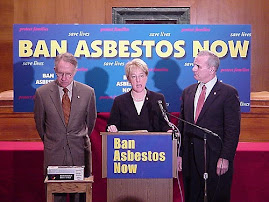
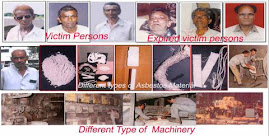
Note: The medical journal Thorax, one of the world's leading respiratory medicine journals, has just published a large, damning 37-year study of mortality among chrysotile asbestos workers in China. The study was carried out by health researchers at the Division of Occupational and Environmental Health, School of Public Health and Primary Care, The Chinese University of Hong Kong, China, at the School of Public Health, Teikyo University School of Medicine, Tokyo, Japan and at the Department of Occupational Health, Huaxi School of Public Health, Sichuan University, Chengdu, China.
The authors found double or triple the mortality rate for "all causes, and all cancers in the asbestos workers, in comparison with the controls... particularly from lung cancer and non-malignant respiratory diseases, associated with exposure to chrysotile asbestos."
This latest study provides yet more compelling evidence that asbestos - be it chrysotile or any other form, and regardless of how carefully or poorly it's handled - is unsafe to use anywhere in the world.
Kathleen Ruff
A 37-year observation of mortality in Chinese chrysotile asbestos workers
Key messages: What is the key question?
What is the major cause-specific mortality in the cohort of workers who were exposed to chrysotile asbestos, and how strong are the associations between the cause-specific mortality and asbestos exposure?
What is the bottom line?
This 37-year prospective cohort study observed significantly greater mortality of all causes, and all cancers in the asbestos workers, in comparison with the controls. However, the strongest association with asbestos exposure was seen in lung cancer and non-malignant respiratory disease, which showed a clear exposure response trend.
Why read on?
Chrysotile asbestos continues to be mined and used heavily in China, largely because a controversy remains on carcinogenic potency of chrysotile asbestos. This prospective cohort study with the longest observation time to date, and high follow-up rate delivers a strong message that exposure to chrysotile asbestos can cause substantially high mortality risk for lung cancer as well as non-malignant respiratory disease.
Authors: Xiaorong Wang,1 Eiji Yano,2 Hong Qiu,1 Ignatius Yu,1 Midori N Courtice,1 L A Tse,1 Sihao Lin,1 Mianzhen Wang3
ABSTRACT
Objectives This 37-year prospective cohort study was undertaken to provide additional evidence for mortality risks associated with exposure to chrysotile asbestos.
Methods 577 asbestos workers and 435 control workers in original cohorts were followed from 1972 to 2008, achieving a follow-up rate of 99% and 73%, respectively. Morality rates were determined based on person-years of observation. Cox proportional hazard models were constructed to estimate HRs of cause specific mortality, while taking into account age, smoking and asbestos exposure level.
Results There were 259 (45%) deaths identified in the asbestos cohort, and 96 died of all cancers. Lung cancer (n¼53) and non-malignant respiratory diseases (n¼81) were major cause-specific deaths, in contrast to nine lung cancers and 11 respiratory diseases in the controls. Age and smoking-adjusted HRs for mortality by all causes and all cancers in asbestos workers were 2.05 (95% CI 1.56 to 2.68) and 1.89 (1.25 to 2.87), respectively. The risks for lung cancer and respiratory disease deaths in asbestos workers were over threefold that in the controls (HR 3.31 (95% CI 1.60 to 6.87); HR 3.23 (95% CI 1.68 to 6.22), respectively). There was a clear exposureeresponse trend with asbestos exposure level and lung cancer mortality in both smokers and non-smokers.http://www.blogger.com/img/blank.gif
Conclusion Data from this prospective cohort provide strong evidence for increased mortality risks, particularly from lung cancer and non-malignant respiratory diseases, associated with exposure to chrysotile asbestos, while taking into account of the smoking effect.
---------------------------------------------------------------------------------------
1 Division of Occupational and Environmental Health, School of Public Health and Primary Care, The Chinese University of Hong Kong, Hong Kong, China
2 School of Public Health, Teikyo University School of Medicine, Tokyo, Japan
3 Department of Occupational Health, Huaxi School of Public Health, Sichuan University, Chengdu, China
http://thorax.bmj.com/search?fulltext=chrysotile&submit=yes&x=0&y=0
Monday, September 26, 2011

Asbestos critics refuse to be converted after meeting with industry powerhouse
MONTREAL — Critics of Canadian asbestos say they weren’t won over by face-to-face meetings Monday with a prominent businessman who argues that his industry has been unfairly maligned.
Some of the industry’s most vocal opponents agreed to a meeting with Montreal businessman Baljit Chadha, who was in Ottawa as part of his effort to revive the reputation of the asbestos trade.
Chadha’s public-relations initiative comes as he seeks a $58-million government loan guarantee from Quebec that would help him reopen one of this country’s last two asbestos mines. The province has set Saturday as the deadline to finalize the deal that would extend the life of the Jeffrey Mine for another 20 years.
But Chadha’s meetings Monday appeared to have left industry critics unswayed: one group quickly issued a news release condemning the asbestos sector shortly after their rendezvous.
Another opponent, New Democrat MP Pat Martin, said he and Chadha had a spirited exchange about the impact on poorer countries — where most Canadian exports of the hazardous mineral are shipped.
Martin, a former asbestos miner who has long opposed Canadian exports, questioned the businessman’s assertions that the hazardous substance can be adequately monitored by safety inspectors overseas.
During their 90-minute talk, he said Chadha also asked him to support his project to extend the life of Quebec’s Jeffrey Mine, for the sake of jobs in Canada and affordable housing in India.
“And I told him I thought that what he’s doing is morally and ethically reprehensible — I (said) that to his face,” Martin said.
“It was a frustrating meeting because either he doesn’t get it, or he thinks we’re stupid.”
Chadha maintains that Canadian chrysotile asbestos, blamed by medical experts for causing cancer and other diseases, can be used safely — even in poorer countries.
He is now determined to correct what he describes as misconceptions about the controversial mineral, which he argues has been tarred by a well-organized lobby.
In an attempt to burnish the industry’s image, he is planning to launch an ad campaign.
Chadha also spoke Monday for about an hour with asbestos opponents from the Rideau Institute — president Steven Staples and senior adviser Kathleen Ruff.
But less than an hour after their discussion, the organization had already issued a news release condemning Chadha for ignoring health experts in pursuit of personal gain.
“It was extremely disappointing,” said Ruff, adding the parties were civil with each other, but clashed on every issue.
“He’s completely fixed, it seems, in denying the scientific evidence and in (his) determination to try and go ahead with this project.”
Chadha, who is a member of Canada’s Privy Council, is also hoping to meet with the editorial boards of major newspapers as well as other groups that have criticized the asbestos industry, including the Canadian Cancer Society and the Canadian Medical Association.
The CMA, however, says it has no intention of attending any such meeting.
Waterloo Record, Sept. 26, 2011
By Andy Blatchford, The Canadian Press
http://www.therecord.com/news/business/article/600424--asbestos-critics-refuse-to-be-converted-after-meeting-with-industry-powerhouse
Some of the industry’s most vocal opponents agreed to a meeting with Montreal businessman Baljit Chadha, who was in Ottawa as part of his effort to revive the reputation of the asbestos trade.
Chadha’s public-relations initiative comes as he seeks a $58-million government loan guarantee from Quebec that would help him reopen one of this country’s last two asbestos mines. The province has set Saturday as the deadline to finalize the deal that would extend the life of the Jeffrey Mine for another 20 years.
But Chadha’s meetings Monday appeared to have left industry critics unswayed: one group quickly issued a news release condemning the asbestos sector shortly after their rendezvous.
Another opponent, New Democrat MP Pat Martin, said he and Chadha had a spirited exchange about the impact on poorer countries — where most Canadian exports of the hazardous mineral are shipped.
Martin, a former asbestos miner who has long opposed Canadian exports, questioned the businessman’s assertions that the hazardous substance can be adequately monitored by safety inspectors overseas.
During their 90-minute talk, he said Chadha also asked him to support his project to extend the life of Quebec’s Jeffrey Mine, for the sake of jobs in Canada and affordable housing in India.
“And I told him I thought that what he’s doing is morally and ethically reprehensible — I (said) that to his face,” Martin said.
“It was a frustrating meeting because either he doesn’t get it, or he thinks we’re stupid.”
Chadha maintains that Canadian chrysotile asbestos, blamed by medical experts for causing cancer and other diseases, can be used safely — even in poorer countries.
He is now determined to correct what he describes as misconceptions about the controversial mineral, which he argues has been tarred by a well-organized lobby.
In an attempt to burnish the industry’s image, he is planning to launch an ad campaign.
Chadha also spoke Monday for about an hour with asbestos opponents from the Rideau Institute — president Steven Staples and senior adviser Kathleen Ruff.
But less than an hour after their discussion, the organization had already issued a news release condemning Chadha for ignoring health experts in pursuit of personal gain.
“It was extremely disappointing,” said Ruff, adding the parties were civil with each other, but clashed on every issue.
“He’s completely fixed, it seems, in denying the scientific evidence and in (his) determination to try and go ahead with this project.”
Chadha, who is a member of Canada’s Privy Council, is also hoping to meet with the editorial boards of major newspapers as well as other groups that have criticized the asbestos industry, including the Canadian Cancer Society and the Canadian Medical Association.
The CMA, however, says it has no intention of attending any such meeting.
Waterloo Record, Sept. 26, 2011
By Andy Blatchford, The Canadian Press
http://www.therecord.com/news/business/article/600424--asbestos-critics-refuse-to-be-converted-after-meeting-with-industry-powerhouse
Bangladesh Doesn't Want Asbestos Laden Ship
Chittagong, Bangladesh - Officials in Bangladesh’s Chittagong region, an
area where hundreds of old ships are dismantled each year, have announced
that they will refuse to accept a Korean ship that is said to contain large
amounts of harmful asbestos and other hazardous materials.
According to a BBC News article written by Anbarasan Ethirajan, officials
are taking a stand after receiving complaints about the ship from several
environmental groups. The vessel, the MV Asia Union, was built in South
Korea in 1982, a time when most countries had ceased the use of asbestos
materials. However, because asbestos was not banned in South Korea until
2009, there is an assumption that it contains large amounts of the material.
“We haven't received any application for MV Asia Union,” said Department of
Environment Director General Monowar Islam. “We have not provided any
environmental clearance for this ship.”
However, a port official in Chittagong noted that they would be sending a
team of inspectors out to the ship to determine exactly what remains on
board. At that point, they will make a recommendation and a decision will be
made as to whether or not to allow the ship into Bangladeshi waters.
Thousands of workers in Chittagong make their living in so-called
ship-breaking yards, dismantling old vessels that come to Bangladesh from
countries around the world. According to the BBC article, Bangladesh gets
about 60 percent of its steel from these ship-breaking yards.
However, such a job can be extremely hazardous because, for decades, ships
were fitted with all sorts of asbestos materials because of the mineral’s
excellent heat-resistant qualities. Throughout the world, individuals who
worked in shipyards or aboard ships that were built while asbestos use was
widespread, including U.S. veterans, have been sickened with asbestos
diseases such as malignant mesothelioma.
http://www.mesothelioma.com/news/2011/09/bangladesh-doesnt-want-asbestos-ship.htm
area where hundreds of old ships are dismantled each year, have announced
that they will refuse to accept a Korean ship that is said to contain large
amounts of harmful asbestos and other hazardous materials.
According to a BBC News article written by Anbarasan Ethirajan, officials
are taking a stand after receiving complaints about the ship from several
environmental groups. The vessel, the MV Asia Union, was built in South
Korea in 1982, a time when most countries had ceased the use of asbestos
materials. However, because asbestos was not banned in South Korea until
2009, there is an assumption that it contains large amounts of the material.
“We haven't received any application for MV Asia Union,” said Department of
Environment Director General Monowar Islam. “We have not provided any
environmental clearance for this ship.”
However, a port official in Chittagong noted that they would be sending a
team of inspectors out to the ship to determine exactly what remains on
board. At that point, they will make a recommendation and a decision will be
made as to whether or not to allow the ship into Bangladeshi waters.
Thousands of workers in Chittagong make their living in so-called
ship-breaking yards, dismantling old vessels that come to Bangladesh from
countries around the world. According to the BBC article, Bangladesh gets
about 60 percent of its steel from these ship-breaking yards.
However, such a job can be extremely hazardous because, for decades, ships
were fitted with all sorts of asbestos materials because of the mineral’s
excellent heat-resistant qualities. Throughout the world, individuals who
worked in shipyards or aboard ships that were built while asbestos use was
widespread, including U.S. veterans, have been sickened with asbestos
diseases such as malignant mesothelioma.
http://www.mesothelioma.com/news/2011/09/bangladesh-doesnt-want-asbestos-ship.htm
New Asbestos Free Brake Plant in Chennai
Federal-Mogul Constructs New World-Class Brake Friction Manufacturing Plant in Chennai
Facility will produce portfolio of market-leading, environmentally-friendly brake friction products without asbestos for all market segments
SOUTHFIELD, Mich., Sept. 26, 2011 /PRNewswire/ -- Federal-Mogul Corporation (NASDAQ:FDML - News) today announced the development of a new brake friction manufacturing facility in Chennai, India. The company, through one of its Indian subsidiaries, broke ground earlier this year on a 10-acre site for construction of the new 38,000-square-meter facility to manufacture the company's broad portfolio of leading-edge technology, environmentally-friendly brake friction materials for the OE and aftermarket segments for automotive, construction, railway and industrial customers. Production is scheduled to begin before the end of 2011.

"India is one of Federal-Mogul's strategic bases of operations for serving the fast-growing Indian automotive market in Southeast Asia and other global markets. Our newest manufacturing facility in Chennai will enable us to better serve brake friction technology requirements for existing and new customers in several markets in the region and globally," said Federal-Mogul President and CEO Jose Maria Alapont. "When we bring on-line the Chennai manufacturing facility later this year, Federal-Mogul will have the ability to manufacture our global market-leading brake friction products in every major geographic automotive market around the world, complemented by our strong base of regional technology and engineering centers supporting our brake friction customers."
The new Chennai facility will initially produce non-asbestos organic disc brake pads for light vehicles, half block linings for commercial vehicles and brake blocks for railway and industrial customers. The company expects to employ approximately 300 people when the facility is in full operation. Federal-Mogul's investment is expected to be approximately US $15 million.
"The combined Indian automotive, commercial and railway markets are expected to grow on average by 14 percent per year over the next five years," said Jean de Montlaur, president and managing director, Federal-Mogul Group of Companies - India. "The aftermarket is also rapidly growing as the influx of new vehicles has expanded the total Indian car parc, resulting in new requirements for high quality OEM-style repair and maintenance parts. Demand in India for technology is becoming increasingly sophisticated as the world's vehicle makers are all competing for a share of this expanding market. India is a strategic market for Federal-Mogul and we have invested in the capacity and infrastructure to maintain and grow our leadership position in India and globally."
"The new Chennai facility will help Federal-Mogul broaden its portfolio of global-leading technologies produced in India," Alapont added. "Bringing the production of new friction technologies to India supports the company's sustainable global profitable growth strategy, which is based on delivering leading high-tech and innovative solutions for improving fuel economy, reducing emissions and enhancing vehicle safety."
Federal-Mogul established joint venture operations in India in the 1950s. The company has since established several wholly owned operations and majority joint ventures in the country. The company has grown its revenue from its Indian operations to approximately $250 million and currently employs more than 6,600 employees in seven manufacturing facilities in Bangalore, Bhiwadi, Parwanoo, Patiala and Radrapur. The new Chennai facility is the company's eighth manufacturing facility in India.
Federal-Mogul's Indian headquarters is in New Delhi, and one of the company's 18 globally-networked technical centers is in Bangalore. Together these facilities design, develop and manufacture a broad range of Federal-Mogul's market-leading vehicle powertrain components, including pistons, piston rings, engine bearings, ignition and sintered products; for both OE and aftermarket customers.
About Federal-Mogul
Federal-Mogul Corporation is a leading global supplier of powertrain and safety solutions to the world's foremost original equipment manufacturers of automotive, commercial, aerospace, marine, rail and off-road vehicles; industrial, agricultural and power generation equipment; as well as the worldwide aftermarket. Federal-Mogul's leading technology and innovation, lean manufacturing expertise, and global distribution network deliver world-class products, brands and services at a competitive cost. The company's sustainable global profitable growth strategy creates value for its employees, customers and shareholders. Federal-Mogul was founded in Detroit in 1899. The company is headquartered in Southfield, Michigan, and employs approximately 45,000 people in 35 countries.
Federal-Mogul's aftermarket products are sold under a variety of well-known brands, including: Abex®, AE®, ANCO®, Beral®, Carter®, Champion®, FP Diesel®, Fel-Pro®, Ferodo®, Glyco®, Goetze®, MOOG®, National®, Necto®, Nural®, Payen®, Precision®, Sealed Power®, Speed-Pro® and Wagner®. All trademarks are owned by Federal-Mogul Corporation, or one or more of its subsidiaries, in one or more countries. Visit the company's website at www.federalmogul.com.
CONTACT:Jim Burke, +1-248-354-4530, Jim.burke@federalmogul.com
Facility will produce portfolio of market-leading, environmentally-friendly brake friction products without asbestos for all market segments
SOUTHFIELD, Mich., Sept. 26, 2011 /PRNewswire/ -- Federal-Mogul Corporation (NASDAQ:FDML - News) today announced the development of a new brake friction manufacturing facility in Chennai, India. The company, through one of its Indian subsidiaries, broke ground earlier this year on a 10-acre site for construction of the new 38,000-square-meter facility to manufacture the company's broad portfolio of leading-edge technology, environmentally-friendly brake friction materials for the OE and aftermarket segments for automotive, construction, railway and industrial customers. Production is scheduled to begin before the end of 2011.

"India is one of Federal-Mogul's strategic bases of operations for serving the fast-growing Indian automotive market in Southeast Asia and other global markets. Our newest manufacturing facility in Chennai will enable us to better serve brake friction technology requirements for existing and new customers in several markets in the region and globally," said Federal-Mogul President and CEO Jose Maria Alapont. "When we bring on-line the Chennai manufacturing facility later this year, Federal-Mogul will have the ability to manufacture our global market-leading brake friction products in every major geographic automotive market around the world, complemented by our strong base of regional technology and engineering centers supporting our brake friction customers."
The new Chennai facility will initially produce non-asbestos organic disc brake pads for light vehicles, half block linings for commercial vehicles and brake blocks for railway and industrial customers. The company expects to employ approximately 300 people when the facility is in full operation. Federal-Mogul's investment is expected to be approximately US $15 million.
"The combined Indian automotive, commercial and railway markets are expected to grow on average by 14 percent per year over the next five years," said Jean de Montlaur, president and managing director, Federal-Mogul Group of Companies - India. "The aftermarket is also rapidly growing as the influx of new vehicles has expanded the total Indian car parc, resulting in new requirements for high quality OEM-style repair and maintenance parts. Demand in India for technology is becoming increasingly sophisticated as the world's vehicle makers are all competing for a share of this expanding market. India is a strategic market for Federal-Mogul and we have invested in the capacity and infrastructure to maintain and grow our leadership position in India and globally."
"The new Chennai facility will help Federal-Mogul broaden its portfolio of global-leading technologies produced in India," Alapont added. "Bringing the production of new friction technologies to India supports the company's sustainable global profitable growth strategy, which is based on delivering leading high-tech and innovative solutions for improving fuel economy, reducing emissions and enhancing vehicle safety."
Federal-Mogul established joint venture operations in India in the 1950s. The company has since established several wholly owned operations and majority joint ventures in the country. The company has grown its revenue from its Indian operations to approximately $250 million and currently employs more than 6,600 employees in seven manufacturing facilities in Bangalore, Bhiwadi, Parwanoo, Patiala and Radrapur. The new Chennai facility is the company's eighth manufacturing facility in India.
Federal-Mogul's Indian headquarters is in New Delhi, and one of the company's 18 globally-networked technical centers is in Bangalore. Together these facilities design, develop and manufacture a broad range of Federal-Mogul's market-leading vehicle powertrain components, including pistons, piston rings, engine bearings, ignition and sintered products; for both OE and aftermarket customers.
About Federal-Mogul
Federal-Mogul Corporation is a leading global supplier of powertrain and safety solutions to the world's foremost original equipment manufacturers of automotive, commercial, aerospace, marine, rail and off-road vehicles; industrial, agricultural and power generation equipment; as well as the worldwide aftermarket. Federal-Mogul's leading technology and innovation, lean manufacturing expertise, and global distribution network deliver world-class products, brands and services at a competitive cost. The company's sustainable global profitable growth strategy creates value for its employees, customers and shareholders. Federal-Mogul was founded in Detroit in 1899. The company is headquartered in Southfield, Michigan, and employs approximately 45,000 people in 35 countries.
Federal-Mogul's aftermarket products are sold under a variety of well-known brands, including: Abex®, AE®, ANCO®, Beral®, Carter®, Champion®, FP Diesel®, Fel-Pro®, Ferodo®, Glyco®, Goetze®, MOOG®, National®, Necto®, Nural®, Payen®, Precision®, Sealed Power®, Speed-Pro® and Wagner®. All trademarks are owned by Federal-Mogul Corporation, or one or more of its subsidiaries, in one or more countries. Visit the company's website at www.federalmogul.com.
CONTACT:Jim Burke, +1-248-354-4530, Jim.burke@federalmogul.com
Wednesday, September 21, 2011
Gujarat Composites Cement Limited's asbestos plant closed?
Shree Digvijay Cement Company was started in 1949. A plant to manufacture asbestos cement pipes and a sheets plant was commissioned by it in November 1962, with Johns Manville Corporation, US, being the technical consultant and the sole selling agent in West Asian and African countries.
In 1994-95, the company approved a scheme of arrangement for transfer of four of its divisions viz.
1) Ahmedabad Cement Mill fibre products division, 2) Shreeram Silk division and Coir & Felt division and investment in shares in 3) Shree Synthetics and 4) Fort William Company to Gujarat Composites Cement Limited with effect from 1 July 1994.
In 1999-2000, the company was declared as a sick industrial company as per the reference made to the BIFR and has appointed ICICI as the operating agency. The company has completed a modernisation programme in 2000-2001 with close circuiting and installation of pre-grinding system for its cement mill.
Sources from Ahmedabad has revealed that the Gujarat Composites Cement Limited's asbestos plant has been closed from 20th September, 2011.
In 1994-95, the company approved a scheme of arrangement for transfer of four of its divisions viz.
1) Ahmedabad Cement Mill fibre products division, 2) Shreeram Silk division and Coir & Felt division and investment in shares in 3) Shree Synthetics and 4) Fort William Company to Gujarat Composites Cement Limited with effect from 1 July 1994.
In 1999-2000, the company was declared as a sick industrial company as per the reference made to the BIFR and has appointed ICICI as the operating agency. The company has completed a modernisation programme in 2000-2001 with close circuiting and installation of pre-grinding system for its cement mill.
Sources from Ahmedabad has revealed that the Gujarat Composites Cement Limited's asbestos plant has been closed from 20th September, 2011.
Saturday, September 10, 2011
Personal Film about Asbestos, Mesothelioma turns into ‘Breathtaking' Experience
Kathleen Mullen started making a documentary as a personal tribute to her father, as a way to honor and remember his life.
She finished the film as an indictment of the industry that killed him — and a government that allowed it to happen.
The transformation — the bridge between the two — is what makes “Breathtaking,” so powerful.
Richard Mullen, her father, died in 2003 of mesothelioma, the cancer caused by an exposure to asbestos. He spent 40 years as a project engineer, often inspecting oil pipes where he unknowingly was inhaling asbestos fibers.
“I wanted to do something from a personal standpoint, something from the heart,” she told Asbestos.com. “But the more research I did, the more I understood: this wasn’t a family issue, this was a global problem effecting people around the world. It really motivated me to tell the whole story.”
The 43-minute film is a love-hate interaction, filled with touching, father/daughter memories alongside stark, cold realities about the hurtful business of asbestos and the deadly path that it still takes.
The film can be seen for free Sept 26 at 6:30 p.m. EST through live streaming at asbestosdiseaseawareness.org.
Mullen Witnessed Asbestos Mining
“I’m proud of this film, very proud that it’s getting out there for people to see,” said Mullen, who is the director of programing at Planet in Focus, a Toronto-based annual film festival that focuses on environmental issues. “It was uncanny, really shocking in fact, at how many people we met during the filming, who had been impacted by this disease.”
During her work, Kathleen traveled to Arizona, where her father originally lived, to the family home in British Columbia, to Quebec, where asbestos is being mined today, and then to India, where asbestos is being sold and used extensively to help build low-income housing.
The film includes personal photographs and home movies that taken before her dad was diagnosed in 2001. It includes footage of his legal testimony against the industry before he died and frank, touching discussions with him and his wife as he battled the illness to the end.
With her camera, she toured both underground and open-pit asbestos mines, talking to people who worked there, listening to conflicting stories about the safety and the need of their jobs. She spoke with those it was killing and with those who were proud of its uses. Canadian governmental officials, who allow the mining of asbestos to continue, declined to be part of her film.
In India she met with people opposed to the importation of asbestos and those who buy it for manufacturing, despite its toxic history. She watched the harvest of asbestos and the end result of its use.
Abestos Lobby Sees Film
Previous screenings of the film have been met with enthusiastic support and sometimes energetic debate. During one screening in Toronto, there was a member of the asbestos lobby who came from Montreal just to be heard.
“It was exciting when he spoke. It really energized people,” she said. “It’s good to know how the other side feels, to know where it is coming from.”
It took Mullen five years to make the film, which was first shown almost a year ago. In it, she moved deftly from first-person experiences to third-person accounts of what she saw, moving from emotional to dispassionate through the film.
According to its latest statistics, the World Health Organization estimates that 90,000 people died annually from an asbestos-related illnesses. Yet the Canadian government still allows the mining and the export of asbestos, even when its use nationally is nearly non-existent.
The dangers of asbestos have been well-documented for more than 50 years. And its use in both the United States and Canada has dropped dramatically since the late 1970s, when regulations began. Many industrialized countries have banned its use in new products, but not every country has such a strict stance. It’s one reason that Mullen still feels the need to tell her father’s story. Not just for him, but for all those around the world who might suffer a similar fate.
“One of our driving forces, as we came to the end, was the desire to hold these companies accountable for what they did and are doing still,” she said. “I don’t know if we can make a difference, but I know we can try.”
http://www.asbestos.com/news/2011/08/29/kathleen-mullen-turns-personal-film-about-asbestos-mesothelioma-into-breathtaking-experience/
She finished the film as an indictment of the industry that killed him — and a government that allowed it to happen.
The transformation — the bridge between the two — is what makes “Breathtaking,” so powerful.
Richard Mullen, her father, died in 2003 of mesothelioma, the cancer caused by an exposure to asbestos. He spent 40 years as a project engineer, often inspecting oil pipes where he unknowingly was inhaling asbestos fibers.
“I wanted to do something from a personal standpoint, something from the heart,” she told Asbestos.com. “But the more research I did, the more I understood: this wasn’t a family issue, this was a global problem effecting people around the world. It really motivated me to tell the whole story.”
The 43-minute film is a love-hate interaction, filled with touching, father/daughter memories alongside stark, cold realities about the hurtful business of asbestos and the deadly path that it still takes.
The film can be seen for free Sept 26 at 6:30 p.m. EST through live streaming at asbestosdiseaseawareness.org.
Mullen Witnessed Asbestos Mining
“I’m proud of this film, very proud that it’s getting out there for people to see,” said Mullen, who is the director of programing at Planet in Focus, a Toronto-based annual film festival that focuses on environmental issues. “It was uncanny, really shocking in fact, at how many people we met during the filming, who had been impacted by this disease.”
During her work, Kathleen traveled to Arizona, where her father originally lived, to the family home in British Columbia, to Quebec, where asbestos is being mined today, and then to India, where asbestos is being sold and used extensively to help build low-income housing.
The film includes personal photographs and home movies that taken before her dad was diagnosed in 2001. It includes footage of his legal testimony against the industry before he died and frank, touching discussions with him and his wife as he battled the illness to the end.
With her camera, she toured both underground and open-pit asbestos mines, talking to people who worked there, listening to conflicting stories about the safety and the need of their jobs. She spoke with those it was killing and with those who were proud of its uses. Canadian governmental officials, who allow the mining of asbestos to continue, declined to be part of her film.
In India she met with people opposed to the importation of asbestos and those who buy it for manufacturing, despite its toxic history. She watched the harvest of asbestos and the end result of its use.
Abestos Lobby Sees Film
Previous screenings of the film have been met with enthusiastic support and sometimes energetic debate. During one screening in Toronto, there was a member of the asbestos lobby who came from Montreal just to be heard.
“It was exciting when he spoke. It really energized people,” she said. “It’s good to know how the other side feels, to know where it is coming from.”
It took Mullen five years to make the film, which was first shown almost a year ago. In it, she moved deftly from first-person experiences to third-person accounts of what she saw, moving from emotional to dispassionate through the film.
According to its latest statistics, the World Health Organization estimates that 90,000 people died annually from an asbestos-related illnesses. Yet the Canadian government still allows the mining and the export of asbestos, even when its use nationally is nearly non-existent.
The dangers of asbestos have been well-documented for more than 50 years. And its use in both the United States and Canada has dropped dramatically since the late 1970s, when regulations began. Many industrialized countries have banned its use in new products, but not every country has such a strict stance. It’s one reason that Mullen still feels the need to tell her father’s story. Not just for him, but for all those around the world who might suffer a similar fate.
“One of our driving forces, as we came to the end, was the desire to hold these companies accountable for what they did and are doing still,” she said. “I don’t know if we can make a difference, but I know we can try.”
http://www.asbestos.com/news/2011/08/29/kathleen-mullen-turns-personal-film-about-asbestos-mesothelioma-into-breathtaking-experience/
Sunday, August 28, 2011
Barry Castleman on why asbestos should be banned in India
International environmental activist Barry Castleman talks about the hazards of using asbestos, in any form including the so called safe 'white asbestos' in building materials. He makes a compelling argument for its elimination.
http://youtu.be/Y_87TapCdxY
http://youtu.be/Y_87TapCdxY
Subscribe to:
Posts (Atom)