Make India Asbestos Free

Make India Asbestos Free
For Asbestos Free India

Journal of Ban Asbestos Network of India(BANI) and India Asbestos Victims Association(IAVA). Asbestos Free India campaign of BANI is inspired by trade union movement and right to health campaign. BANI has been working since 2000. It works with peoples movements, doctors, researcher-activists besides trade unions, human rights, environmental, consumer and public health groups. BANI-IAVA demand criminal liability for companies and medico-legal remedy for victims. Editor: Dr. G. Krishna, Advocate

Showing posts with label Asbestos Free India. Show all posts

Tuesday, July 8, 2025

India's Cabinet Committee on Economic Affairs must learn from USA's continued support for banning white chrysotile asbestos


Ban Asbestos Network of India (BANI) and India Asbestos Victims Association (IAVA) welcome continued support of US Environmental Protection Agency (USEPA) to ban white chrysotile asbestos

India's Cabinet Committee on Economic Affairs ought to draw lessons from the efforts by US EPA to protect the public from adverse health effects of asbestos, a known carcinogen.

Having banned mining of asbestos, trade in asbestos waste and use of asbestos roofs on 7,349 railway platforms, Indian government has initiated a campaign for making schools asbestos free. Notably, the top Indian leaders were kept under asbestos roofs during Internal Emergency imposed in June 1975.

Significantly, Nitish Kumar, Bihar's Chief Minister had assured the State Assembly on July 2, 2019 that no new asbestos based factories will be allowed in the state. Several legislators had raised questions regarding asbestos based plants in Bihar State Assembly and Bihar Legislative Council in the backdrop of people's anti-asbestos struggle against proposed asbestos based factories following which the construction of these factories were stopped in the districts of 1) Muzaffarpur, 2) Vaishali, 3) Madhubani, 4) West Champaran and 5) Giddha, Koelwar, Bhojpur in Bihar. These unsuccessful proposals were made by 1) West Bengal based Utkal Balmukund Cement & Roofings Ltd, 2) Bengal based Utkal Asbestos Industries Ltd, 3) Rajasthan based A Infrastructure Ltd, 4) Telangana based Hyderabad Industries Ltd, 5) Tamil Nadu based Nibhi Industries Private Limited.

Despite the assurance of the Chief Minister of Bihar, two units of asbestos based factories of Tamil Nadu based Ramco Industries Limited continue to operate with permission for one unit A 120,000 MT Annum capacity Asbestos Cement Sheet Plant and 200,000 MT capacity Asbestos Grinding Plant exists in Bihiya Block of Bhojpur adjacent to a temple amidst several villages and agricultural fields. Ramco's one unit was allotted 20 acres by the state government on lease for 90 years. These units are located in the proximity of Jawahar Navodaya Vidyalaya in Bihiya, Bhojpur. It poses a grave threat to the life and health of the students and teachers of the school. In keeping with Union government's asbestos free schools nation-wide campaign, these units must be made to manufacture non-asbestos products.  
 
Recalling lessons from the world's worst industrial disaster which happened in December 1984, Patna High Court has underlined in its order the inconsistency in the continued existence of the asbestos based factories in Bihiya, Bhojpur. The High Court wondered as to how it is that poisonous plants which have rightly been recognized as hazardous in Muzaffarpur, Vaishali, West Champaran and Madhubani becomes non-poisonous in Bihiya, Bhojpur? How can the human body of the residents of Bihiya, Bhojpur be immune to the hazards asbestos fibers?

Taking a consistent position against asbestos based plants and pursuant to complain against the company, Vivek Kumar Singh, as Chairman, Bihar State Pollution Control Board (BSPCB) had cancelled the Non-Objection Certificates (NOCs) given to the hazardous enterprise of Ramo company Under Water(Prevention and Control of Pollution) Act, 1974, Air (Prevention and Control of Pollution) Act, 1981 and rules 3 (1) Schedule 1 of Hazardous Waste (Management, Handling and Transboundary Movement) Rules under Environment (Protection) Act 1986 which deals with hazardous wastes generated during the production of asbestos or asbestos-containing materials including asbestos-containing residues, discarded asbestos and dust/particulates from exhaust gas treatment.

Following the cancellation of NOCs, Ramco company approached the Appellate Authority to appeal against the cancellation. At the hearing of their appeal the Appellate Authority happened to be same Vivek Kumar Singh himself who as Chairman, Bihar State Pollution Control Board (BSPCB) had cancelled their NOCs. The company used this manifest violation of the principle of natural justice as a ground to seek relief from the Patna High Court and got it. Instead of confirming its order asking the state government to rectify the error by appointing a separate person as Appellate Authority in compliance with the principle of natural justice and unmindful of the fact that the fact of violation of environmental laws has not been disputed, the High Court allowed the company to operate its plant. Although a new Appellate Authority has been appointed and the High Court asked the new Chairman, BSPCB to act after examining the complaint against it, the Board has failed to reiterate it's earlier decision. Dr. Devendra Kumar Shukla is the current Chairman, BSPCB and Neeraj Narayan is the Member Secretary, BSPCB. BSPCB was constituted 1974 under the provisions of the Water (prevention and Control of pollution) Act, 1974. Ashutosh is the Chairman, Bihar State Environment Impact Assessment Authority (SEIAA). Since April 2025, Harjot Kaur Bamhrah is Bihar's Additional Chief Secretary, Department of Environment and Forest.

At the Conference on Environmental and Occupational Health, Awadesh Narain Singh, Chairman, Bihar Legislative Council favored phasing of hazardous factories in public interest if they cause incurable but preventable diseases. He said, "buying asbestos is buying akin to buying cancer. I will get asbestos removed from my residence." He had announced that he would convene an environmental conference in the auditorium of the Bihar Legislative Council. He added, "the ache of asbestos hazards is worse than the ache of unemployment."  His speech is available at: https://youtu.be/B9TbemRUkYM?si=cxalS9HS6dXgL6HS

In such a context, US EPA's actions to protect the public from exposure to asbestos under the Toxic Substances Control Act (TSCA) assumes huge significance. These actions include the following:
 
US EPA released the final Risk Evaluation for Asbestos Part 2: Supplemental Evaluation Including Legacy Uses and Associated Disposals of Asbestos in November 2024.

In part 2, US EPA evaluated legacy uses and associated disposals of asbestos including chrysotile asbestos and five additional asbestos fiber types. US EPA determined that legacy uses of asbestos that result in asbestos exposure significantly contribute to the unreasonable risk presented by asbestos. However, US EPA’s risk finding does not mean that every person with asbestos-containing material in their house or school will suffer adverse health effects. If asbestos is present in the insulation in an older building and the asbestos-containing insulation is not disturbed, the asbestos does not present a risk to those living or working in or near the building.

In March 2024, US EPA had finalized the risk management rule for chrysotile asbestos. The rule prohibits ongoing uses of the only known form of asbestos currently imported, processed and distributed in the U.S., and will protect people from lung cancer, mesothelioma, ovarian cancer, laryngeal cancer and other health problems caused by asbestos exposure.

In March 2023, US EPA had released additional data related to the proposed risk management rule for public comment. These additional data concern chrysotile asbestos diaphragms used in the chlor-alkali industry and chrysotile asbestos-containing sheet gaskets used in chemical production.

In April 2022, US EPA had proposed a Ban of Ongoing Uses of Asbestos to protect American workers and families by prohibiting ongoing uses of the only known form of asbestos currently imported into the U.S. to address the unreasonable risk found to human health in the December 2020 chrysotile asbestos risk evaluation. This proposed rule was the first-ever risk management rule issued under the new process for evaluating and addressing the safety of existing chemicals under re-authorized Toxic Substances Control Act (TSCA).

In December 2020, Final Risk Evaluation for Asbestos, Part 1: Chrysotile Asbestos, found unreasonable risks to human health for ongoing uses of chrysotile asbestos.

In April 2019, Restrictions on Discontinued Uses of Asbestos Rule was set in motion to ensure that asbestos products that are no longer on the market cannot return to commerce without the Agency evaluating them and putting in place any necessary restrictions or prohibiting use. The uses covered under this rule were not already prohibited under TSCA and could have returned to the market at any time.

It may be recalled that in 1989, US EPA had imposed partial ban on the manufacture, import, processing, and distribution of some asbestos-containing products. US EPA had also banned new uses of asbestos which prevent new asbestos products from entering the marketplace after August 25, 1989. These uses remain banned. The April 2019 rule does not provide a way for these uses to return to the marketplace.

In the latest development, the U.S. Environmental Protection Agency (US EPA) has formally filed a notice with the U.S. Court of Appeals for the Fifth Circuit to withdraw its June 16, 2025 motion to pause litigation over the Asbestos Part 1: Chrysotile Asbestos rule for an additional six months. The Asbestos Disease Awareness Organization (ADAO)—the only petitioner to oppose the motion—welcomes the Agency’s decision to move forward rather than delay.

The US EPA had sought the delay to reconsider the white chrysotile asbestos ban through a lengthy notice-and-comment rulemaking process that could have extended nearly three years or longer.  ADAO opposed the motion, warning that further delays would create regulatory confusion, weaken protections, and place countless lives at continued risk.“The EPA’s sudden reversal is a quiet but clear acknowledgment that their plan to rethink the chrysotile ban created more chaos than clarity,” said Linda Reinstein, ADAO Co-Founder and President. “Their motion would have opened the door to years of delay, confusion, and increased risk to public health. ADAO stood alone in opposition—not because it was easy, but because it was necessary. When agencies falter, we don’t flinch. We will always fight to protect lives and to end the suffering, diseases, and deaths from asbestos.”  

The US EPA’s July 7, 2025 filing confirms the Agency no longer intends to pursue changes to the rule at this time and proposes resuming litigation. The Court has been asked to set a new deadline of August 8, 2025, for determining next steps.

“The EPA’s withdrawal of its motion reflects a recognition that further delay would have undermined the integrity of the Toxic Substances Control Act—legislation that was amended  in 2016 precisely because of EPA’s past failure to ban asbestos—and the urgent need to protect public health,” said Bob Sussman, counsel to ADAO, and a former EPA official. “ADAO’s strong opposition made clear that the rule should be defended—not dismantled.”

In India, a recent publication entitled "Working and living environment of the labour in the hazardous industry: Legal remedy for migrant workers and their families in the asbestos industry and construction industry" points out that almost all the hazardous industries employ migrant workers as contract and causal workers. They face hazards on a permanent basis but their job is of temporary nature in legal sense, which implies that they do not have the cover of social security. A significant number of them are undocumented workers. These workers and their families constitute a community which are perennially exposed to environmental and occupational exposures. Studies have inferred that lack of documentation and data is limiting any action to measure and address these exposure risks. The living and working conditions of migrant and non-migrant workers and their families make them vulnerable to exposures from hazardous asbestos industry and asbestos handling construction industry. In general, these workers do not have adequate legal, social and occupational protection. Their condition remains invisible to the law makers, law enforcers, planners, policy makers and public institutions concerned with public health despite the fact that WHO and ILO have recommended elimination of all kinds of asbestos, and some 70 countries have banned it.

It underlines the need for tracking diseases and deaths resulting from particular conditions known to be caused almost exclusively by environmental and occupational exposure, has been ignored for long. It has been estimated that enviro-occupational diseases kill six times more workers (migrants and non-migrants) than accidents. The data for migrants is yet to be disaggregated. The externalization of environmental and occupational health cost of these migrant workers makes hazardous industries like asbestos industry and construction industry, which are poorly regulated, quite profitable. Most of the fatal environmental and occupational diseases in these industries go unreported. This holds true for the asbestos industry and construction industry. Besides the asbestos based factories, the sites of construction industry contain asbestos in many building materials. Studies have pointed out that men and women who work in the hazardous industry have higher rates of environmental and occupational diseases than the general population.

It recommends effective preventive policy interventions to provide social security to workers, and their families who too get exposed to carcinogenic mineral fibers of asbestos.These workers end up exposing their family members when they carry the toxic fibers of asbestos on their bodies and clothes to their houses and habitations. This constitutes secondary exposure. The families of the migrant and non-migrant workers face constant risk of asbestos related diseases due to secondary exposure.

Studies with regard to Indian condition have shown that besides workers and consumers, wives, children, and other relatives of workers who handle asbestos or who encounter asbestos in their working environment, have higher rates of asbestos related diseases. These workers and their families are subject to poor and hazardous living and working conditions.

Like Asbestos Disease Awareness Organization (ADAO) which is dedicated to preventing asbestos exposure and eliminating all asbestos-caused diseases, Ban Asbestos Network of India (BANI) is seeking criminal liability for companies and medico-legal remedy for victims along with India Asbestos Victims Association (IAVA).


Saturday, October 1, 2022

No asbestos mine functional in India but trade, manufacture and use of asbestos yet to be stopped


  Given the fact that 70 nations have banned asbestos and Brazilian Supreme Court has declared use of asbestos as unconstitutional, question of  Sangamlal Gupta and P.P. Chaudhary  on “Ban on Asbestos Mines” in the Parliament and the reply of Pralhad Joshi, minister of coal and mines assumes significance. The minister replied that no asbestos mine functional in India because of the harmful effect of asbestos. According to World Health Organisation (WHO), 250, 000 are dying annually because of asbestos related diseases. 25 per cent of the entire asbestos produced globally comes to India because India is yet to ban trade, manufacture and use of all kinds of asbestos although it has banned mining of all kinds of asbestos. 

India imported asbestos to the tune of 3,61,164 tonnes in 2019-20. It was 3,64,105 tonnes in the previous year.
"Almost entire import was that of chrysotile asbestos", reveals the Indian Minerals Year Book 2020 published in November 2021. It also reveals that India is importing small amount of non-chrysotile asbestos as well. The imports of chrysotile asbestos were mainly from Russia (85%), Brazil, Kazakhstan and Hungary (3% each), and Poland and South Africa (2% each).


A total of 25,009 tonnes asbestos-cement products were also imported in 2019-20 as against 29,358 tonnes in the previous year. These imports were mainly from Thailand (93%) and Indonesia (4%). Besides above, asbestos-fibre of 3,60,839 tonnes was imported during the year 2019-20 as compared to 3,63,902 tonnes in the previous year.

The data reveals that despite the Brazilian Supreme Court's landmark verdict declaring use of asbestos to be unconstitutional, it is exporting it to India not realizing that human biology is same everywhere -- what is poisonous for Brazilians and some 70 countries cannot be non-poisonous for Indians. It also brings to light the fact although South Africa, Hungry and Poland have banned asbestos, they continue to export it to India.

The imports of asbestos fibre products were 3,580 tonnes during the year 2019-20 as compared to 4,425 tonnes in the previous year. The imports of asbestos fibre products were mainly from China (31%), Japan (23%) and Denmark (12%). The 2020 report points out that, in addition to asbestos minerals, an unknown quantity of asbestos is traded within manufactured products, possibly including brake linings and pads, building materials, gaskets, millboard, yarn and thread.

Meanwhile, exports of asbestos decreased substantially to 1,001 tonnes in 2019-20 as compared to 1,112 tonnes in the previous year. The exports were mainly to Bangladesh (92%) and Sri Lanka 7%. The exports of asbestos (fibre products) were at 43,310 tonnes in 2019-20 as compared to 41,677 tonnes in the previous year. The exports were mainly to USA (24%), UAE (7%), Egypt (6%) and Nepal, Canada, Sri Lanka and Kenya (3% each).

The exports of asbestos (chrysotile) were at 997 tonnes during the year 2019-20 as compared to 1090 tonnes in the preceding year. The exports of asbestos (others) decreased to 5 tonnes during the year 2019-20 as compared to 22 tonnes in the preceding year. These exports were solely to Nepal.
The exports of asbestos-cement products were 91,100 tonnes in 2019-20 as compared to 67,352 tonnes in the preceding year. The exports of asbestos-cement products were mainly to UAE (36%), Nepal (26%) and Qatar (11%). These countries ought to act to protect the health of their present and future citizens. It is clear that despite banning asbestos, Canada and Nepal continue to import asbestos and asbestos based products.

Notably, WHO has recommended elimination of all kinds of asbestos and asbestos based products. India has banned mining of all kinds of asbestos because of it is harmful impact on human health. It has been established that safe and controlled use of asbestos is impossible. India has banned trade in asbestos waste (dust and fibers) and its use in ships, but it continues to trade raw asbestos and asbestos-based products. India continues to manufacture and use asbestos based products. 

Friday, May 20, 2022

Why Kerala must be made free from asbestos related diseases

To


Hon'ble Chief Minister 
Government of Kerala 
Thiruvananthpuram 
Kerala

Date: May 21, 2022

Subject: Need to make Kerala free from asbestos related diseases 

Sir, 

With reference to the news item "Kerala ministers meet to discuss school fitness ahead of reopening" published in The Hindu on May 17, 2022 and the recommendation of Kerala Human Rights Commission dated 31 January, 2009 for ban on asbestos use in schools and decontamination of schools laden with asbestos, we wish to bring certain germane facts, documents and correspondence to your attention. 

Having asbestos in the vicinity or anywhere is harmful to human health as exposure to these mineral fibers causes incurable diseases like lung cancer, ovarian cancer, mesothelioma and asbestosis. Although belated Kerala govt is taking a small step in the right direction. Asbestos of all kinds is banned in 70 nations. Health being a State subject under the Constitution, Kerala should become the first state to ban manufacture of asbestos based products, it's procurement and use in compliance with Supreme Court's verdict in Consumer Education Resource Centre v. Union of India, WHO's recommendation and ILO's resolution. Kerala should adopt scientific method for the disposal of asbestos as well. State government ought to emulate the 70 nations.

Pursuant to letter of Dr Barry Castleman, the author of "Asbestos:Medical and Legal Aspects" dated 15th July, 2010, telephonic conversation dated 13th July, 2010 with Industry Minister, Kerala, reply of 22th June, 2010 from the Director of Industries and Commerce to his letter to Minister of Industry, Kerala dated 18th January, 2010 and his conversations with Labor Minister, Kerala in the context of Kerala Human Rights Commission order dated 31st January, 2009 banning use of asbestos-cement construction materials in schools, hospitals, and other public buildings, we wish to draw your attention towards the New Delhi Declaration Seeking Elimination of cancer causing all forms of asbestos including chrysotile from India which was adopted and endorsed by eminent scientists and doctors on 24th March, 2011. The Declaration is given below. Dr Castleman’s first letter is also given below. 

This Declaration was adopted at a Round Table which was organized immediately after the conclusion of International Conference on "Emerging Trends in Preventing Occupational Respiratory Diseases and Cancers in Workplace" at Maulana Azad Medical College that expressed grave concern about asbestos related diseases like lung cancer in the national capital. The Declaration is given below for your perusal and immediate consideration.

This is also to draw your attention towards the fact that Kerala has a state owned asbestos company, Kerala Asbestos Cement pipe Factory Limited. A study titled 'Risk factors of ovarian cancer in Trivandrum' of 2008 refers to asbestos exposure too in its research.

The delegates at the Round Table discussed the asbestos policy of Kerala. They discussed the order of Kerala Human Rights Commission (KHRC) banning use of asbestos materials. The delegates were eager to know about the status of enforcement of KHRC order.

The delegates were of the considered opinion that Kerala government should phase out manufacturing and use of asbestos while implementing the KHRC order in order to pursue a path of alternatives of asbestos as a building material.

These delegates shared their views and gave their valuable hand written notes so that it can be used in a credible way while strongly recommending the need for immediate ban on asbestos to Government of India, State Governments and the relevant ministries.

Dr Alec Farquhar as Managing Director, Occupational Health Clinics for Ontario Workers, Canada said, “We now have around 500 asbestos cancer cases every year in Ontario from a population of 13 million. If you (India) continue on your current path, you will multiply our death count by 100 times. That would be 50, 000 Indian workers dying every year from asbestos. In Ontario, we learned that safe use of asbestos is impossible. I urge you from the bottom of my heart, please do not make the same mistake as we made in Canada. Stop using asbestos and use a safe alternative.” Meanwhile, Canada has banned all kinds of asbestos. 

Deeply disturbed by the state of affairs in India with regard to asbestos consumption, Professor Elihu D Richter MD MPH, Hebrew University-Hadassah School of Medicine, Israel said, “All form of asbestos kill. India should bury asbestos, not people. Here is a case for examining whether those countries which export asbestos to India are committing a crime against humanity, because they are engaging in willful neglect. India should not repeat the mistakes of going back some 70 years which will kill tens of thousands of workers and their families.” Richter called on experts in human rights to reframe the carcinogen as a human rights violation to ban asbestos.

“No matter what mis-information comes of Canada or the Indian asbestos industry about Chrysotile, there is no question that science has shown that Chrysotile causes asbestosis, lung cancer and mesothelioma. This is the conclusion of World Health Organisation. The International Agency for Research on Cancer, and other organizations that have no biases except for protecting people’s health,” said Prof. Arthur L Frank, PhD, Department of Environmental and Occupational Health, Drexel University School of Public Health, US.

Why does Canada apply strict measures domestically to protect the health of Canadians handling asbestos and yet exports asbestos to developing countries such as India, where the capacity to implement and monitor the application of similar precautionary measures is inadequate?, asked Dr. T.K. Joshi, Fellow, Collegium Ramazzini, Italy, an independent, international academy founded in 1982 by Irving J. Selikoff, Cesare Maltoni and other eminent scientists. The academy comprises of 180 internationally renowned experts in the fields of occupational and environmental health. The mission of the Collegium Ramazzini is to advance the study of occupational and environmental health issues and to be a bridge between the world of scientific discovery and the social and political centers which must act on the discoveries of science to protect public health. Notably, Canada avoids using asbestos in it was own country but exports it to India.

Prof (Dr) Qamar Rahman, Fellow of National Academy of Sciences, Dean, Integral University, Lucknow & former Deputy Director, Industrial Toxicology Research Centre, Lucknow asserted, “This is high time that Government of India should ban the use of asbestos in India. It has been proven scientifically that asbestos based articles such as roof ceilings, storage tanks will release fibers. The asbestos fibers will be the cause of exposure to our coming generations.”

“It is well known around the world that asbestos is hazardous to human health, and that there is no such thing as “safe use” of asbestos, just like there is no “safe cigarette”. The government of India would do better to aim for growth through development of safe industries, and to lower the prices of substitutes, rather than promote use of this hazardous substance,” opined Dr Yael Stein, MD, Unit of Occupational and Environmental Medicine, Hebrew University, Israel.

The conference was organised by Centre for Occupational Health, New Delhi supported by Union Ministry of Labour & Employment, ESI, DGMS and DGFASLI in collaboration with Drexel University, US at Maulana Azad Medical College, New Delhi. The conference was deeply concerned about asbestos related diseases and the alarming rise of asbestos in India. The Round Table was organized by Ban Asbestos Network of India (BANI), which has been working for asbestos free India.

BANI is a research based collective of concerned scientists, doctors, public health scholars, environmental researchers and journalists that has been campaigning for asbestos free India since 2000.

In short, we request you to take urgent steps on the following points:

• Create a Registry of Incurable Lung Cancers and Mesothelioma besides a registry of asbestos related diseases

• Start efforts to decontaminate asbestos laden buildings including schools and hospitals

• Create a building registry of those buildings and products which have asbestos.

• Include environmental and occupational health study in the medical education of all the 300 medical colleges in the state

• Stop Kerala Asbestos Cement pipe Factory Limited from manufacturing cancer causing asbestos based products

• Adequately compensate the victims of asbestos-related diseases, create a database of asbestos exposed people and victims as well besides providing legal and possible medical relief and taking preventive measures

• Review and rescind those policies which promote asbestos and asbestos based products in the state

Your Government has the solemn duty to safeguard the public health of present and future generations from the exposures of killer fibers of asbestos which are akin to a time bomb for the lungs. We would be quite happy to share more details about the asbestos related incurable diseases.

We will be happy to share more information in this regard.

Thanking you in anticipation

Warm regards

Gopal Krishna, LL.M., Ph.D
Convener
Ban Asbestos Network of India (BANI)
Mb: 09818089660


New Delhi Declaration

Seeking Elimination of all forms of Asbestos including Chrysotile from India

Date: 24 March, 2011


Recalling the Ban Asbestos Resolution of 2002, WHO Resolution of 2005 and ILO Resolution of 2006 seeking elimination of future use of asbestos of all forms, in the face of massive asbestos exposure underway in India;

Taking note of The White Asbestos (Ban on Use and Import) Bill, 2009 introduced in Rajya Sabha (Upper House of Indian Parliament) and the order of the Kerala State Human Rights Commission banning the use of asbestos in schools;

Considering the anti asbestos movement against 12 proposed asbestos plants in Bihar in face of massive people’s resistance;

Outraged at the Union of India’s Budget 2011-12’s callous reference to asbestos by including it under the Rashtriya Swasthya Bima Yojana to cover ‘unorganized sector workers in hazardous mining and associated industries like asbestos etc’ and on the other hand Bihar’s Deputy Chief Minister’s Budget is allocating land for 4 new asbestos plants;

Recognising the fact that enviro-occupational health infrastructure in India is weak or non-existent in the face of workers and consumers who are sick and dying from asbestos-caused cancer and other related diseases;

Endorsing The STATEMENT OF OBJECTS AND REASONS of The White Asbestos (Ban on Use and Import) Bill, 2009 introduced in the Indian Parliament that reads: “The white asbestos is highly carcinogenic even the World Health Organisation has reported that it causes cancer. It is a rare fibrous material that is used to make rooftops (roofing material) and break (brake) linings. More than fifty countries have already banned the use and import of white asbestos. Even the countries that export it to India prefer not to use it domestically. But in our country, it is imported without any restriction. Canada and Russia are the biggest exporters of white asbestos. In 2007, Canada exported almost Ninety five percent of the white asbestos it mined and out of it forty-three percent was shipped to India. It is quite surprising that our country is openly importing huge quantity of a product, which causes cancer. This is despite the fact that safer and almost cheap alternatives to asbestos are available in the country. Instead of importing a hazardous material, it will be better if we spend some money in research and development and use environment friendly product. In view of the above, there is an urgent need for a total ban on the import and use of white asbestos and promote the use of alternative material.”

Appreciating Supreme Court of India’s order of 21st January, 2011 that takes cognizance of the above mentioned Bill and the resolutions of ILO and WHO and seeks government to take immediate preventive steps;

Taking cognizance of the human rights violation involved in exposing people to killer asbestos fibers and how even if few asbestos fibre reach the right places, it causes irreversible damage leading to asbestosis, lung cancer or mesothelioma;

Considering Government of India’s role in preventing the listing of chrysotile asbestos as a hazardous product under the Rotterdam Convention, an International Agreement that requires that importing countries be warned of the risks associated with hazardous products is unbecoming of a nation of India’s stature. It is unconscionable that the government knowingly allows trades in a killer product that will cause death of hundreds of thousands of people in India in general and in Andhra Pradesh, Jharkhand, Gujarat, Bihar and Rajasthan in particular and elsewhere in the world;

Reminding the Government of India that there is incontrovertible evidence that creates a compelling logic for making India asbestos free;

Condemning the asbestos exporting countries liaison with the Indian asbestos industry to which Government is turning a blind eye who have unleashed a misinformation campaign about controlled use of asbestos products which is a fantasy;

Disapproving Ministry of Environment & Forests Experts Appraisal Committee on Industry for approving environmental clearance of asbestos plants;

Asserting the fact that so far some 55 countries have banned all forms of asbestos, and are already using alternative materials;

Underlining that almost every international health agency of repute including the World Health Organization, the International Labor Organization, International Agency for Research on Cancer, Occupational Safety and Health Administration, National Institute for Occupational Safety and Health, and the American Cancer Society agree there is no safe level of asbestos exposure. Most recently, the International Agency for Research on Cancer (IARC) reconfirmed that all commercial asbestos fibers - including chrysotile, the most commercially used form of asbestos - cause lung cancer and mesothelioma. In addition, IARC newly confirmed that there is sufficient evidence that asbestos causes ovarian cancer and reconfirmed asbestos causes laryngeal cancer;

We urge the Government to adequately compensate the victims of asbestos-related diseases, create a database of asbestos exposed people and victims as well besides providing legal and possible medical relief and taking preventive measures. We call on the government to create a mesothelioma registry and a building registry of those facilities which have asbestos. We seek inclusion of environmental and occupational health study in the medical education of all the 300 medical colleges in India

We recommend that the Government should start efforts to decontaminate asbestos laden buildings including schools and hospitals

We express shock at the instance countries like Canada using tax-payers money and Canadian embassies to actively promote the sale of asbestos around the world;

We appeal to the Government of India to put a ban on export, import, manufacturing, use and mining of all forms of asbestos including chrysotile (white) in India.

We call upon the Government of India, State Governments in general and Bihar Government in Particular besides Indian Ministry of Health, Ministry of Environment, Ministry of Commerce, Ministry of Labour, Ministry of Consumer Affairs and Ministry of Mines to initiate steps for an immediate ban on use, manufacture and trade of all forms of asbestos (including Chrysotile or White Asbestos).

Endorsed by:

Prof (Dr) Arthur Frank, Professor, Chair: Department of Environmental and Occupational Health, Drexel University School of Public Health, US, Email- alf13@drexel.edu

Dr Aleck Farquhar, Managing Director, Occupational Health Clinics for Ontario Workers, Canada, E-mail- afarquhar@ohcow.on.ca

Professor Elihu D Richter MD MPH, Hebrew University-Hadassah School of Medicine, Israel, E-mail-elihudrichter@gmail.com

Dr Yael Stein, MD, Unit of Occupational and Environmental Medicine, Hebrew University, Israel, E-mail- stein444@gmail.com

Dr Lyle Hargrove, Chairperson, Occupational Clinics for Ontario Workers, Canada, E-mail- lyle.hargrove@gmail.com

Prof (Dr) Qamar Rahman, Fellow, National Academy of Sciences, India & former Deputy Director, Industrial Toxicology Research Centre, Lucknow E-mail- qamar_15@sify.com

Dr. T.K. Joshi, Fellow, Collegium Ramazzini, Italy, E-mail- kantjoshi@gmail.com


Dr Barry Castleman's Letter to Industry Minister, Government of Kerala

January 18, 2010

Hon. Elamaran Kareem

Minister of Industry

Kerala


Dear Mr. Kareem,

I am a public health scientist and work with people around the world on public health efforts to prevent asbestos disease. Dr. MK Pandhe has been a key ally for years in trying to reverse India's disastrous expansion of asbestos use in construction. He advised me last month while I was in India that you would be receptive to hearing about this issue and what you and other leaders could do about it in Kerala.

I have also discussed this issue with Labor Minister PK Gurudasan and several members of his staff last month while I was in Kerala, and he was interested in taking action.

The Kerala Human Rights Commission has announced that schools, hospitals, and other public buildings shall no longer use asbestos-cement construction materials. This is consistent with the global recognition that asbestos dust inhalation causes cancer and a potentially fatal lung scarring disease, asbestosis. About 50 countries have banned asbestos, and the World Health Organization (WHO) has called for all countries to ban asbestos products. The widespread use of asbestos in construction materials in India is particularly dangerous, because of the impossibility of protecting the millions of construction workers and building occupants from the dust raised in construction, repair, renovation, and demolition. There is no safe threshold of exposure to airborne asbestos dust that is free from the risk of cancer. Mesothelioma, the "signal tumor" for asbestos exposure, has been widely reported in neighbors of asbestos plants and among family members who lived in the households of asbestos workers. http://www.who.int/occupational_health/publications/asbestosrelateddiseases.pdf

The World Bank’s policy is to avoid asbestos in new construction and to use internationally recognized precautions if in-place asbestos has to be disturbed in Bank-funded construction projects. I was the consultant to the World Bank in drafting its Good Practice Note on asbestos published in May, 2009, and am currently a consultant to WHO. http://siteresources.worldbank.org/EXTPOPS/Resources/AsbestosGuidanceNoteFinal.pdf

In contrast to most of India, Kerala uses very little asbestos, and the one asbestos-cement roofing factory in Kerala is state-owned. The factory is in a district next to the one you come from, I believe. This provides an extraordinary opportunity for Kerala to make public health advances. The state-owned plant can be converted to make non-asbestos fiber-cement. And Kerala can ban asbestos in construction materials, which for India account for over 90% of current asbestos use which is rising at 10 percent yearly.


As a consultant for the World Bank and WHO, one thing I have tried to do is assemble is a directory of companies offering alternative technology to asbestos-cement products. In the course of this, I have come into contact with people in South Africa who replaced asbestos with polyvinylalcohol (PVA) fibers and cellulose, a company in Brazil that uses polypropylene and cellulose instead of asbestos, and another firm in Italy that touts acrylic fibers as superior in replacing asbestos in fiber-cement. I would be glad to put you in touch with these people, so you can invite them to make proposals for conversion of the state-owned asbestos-cement plant in Kerala. These sources say that once a plant is converted, the products cost up to 10-12% more than asbestos products and have some superior properties (e.g., lighter, less brittle, improved nailability).


I can provide abundant additional information on any of the issues covered above but will end this letter here as a proposal to you for more detailed consideration of the matter. Please let me know if you are interested in this idea of substituting asbestos at the state-owned plant, and I will provide more information on people to contact, etc. The approach of avoiding asbestos through state procurement has already been recognized by the Kerala Human Rights Commission. This can be followed with a total ban on asbestos use in Kerala, with potentially enormous lifesaving value for the people of Kerala and all India.

With best wishes,

Barry Castleman


--
Barry Castleman, ScD
Environmental Consultant
USA


Tuesday, January 18, 2022

Hazardous Chrysotile Asbestos and Occupational Safety, Health & Working Conditions Code

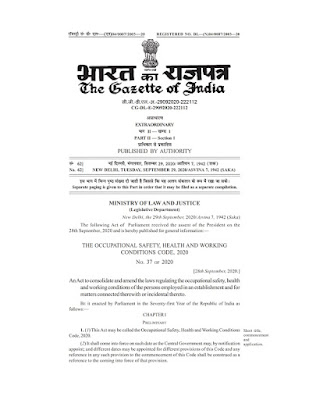
The three Schedules under Occupational Safety, Health and Working Conditions (OSHWC) Code 2020 refer to hazardous asbestos, banned in 70 nations. It also refers to asbestosis, an incurable disease. 

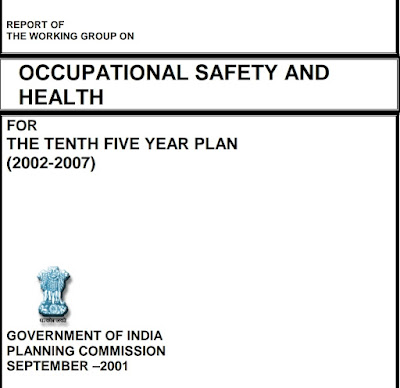
The report of Planning Commission of India's Working Group on Occupational Safety and Health (Tenth Five Year Plan) revealed that hazardous substances like asbestos which have a potential to cause serious occupational diseases such as asbestosis. It pointed out substantial prevalence of occupational health disorders amongst the workers such as Asbestosis. The prevalence rate for Asbestosis was reported to be 7.25%. 

The Vision Statement of Ministry of Environment, Forests and Climate Change recommends phase out of chrysotile asbestos saying, "Alternatives to asbestos may be used to the extent possible and use of asbestos may be phased out." http://moef.nic.in/divisions/cpoll/envheal th/visenvhealth.pdf 

The Concept Paper of Union Ministry of Labour presented at Fifth India-EU Seminar states, "The Government of India is considering the ban the mining and use of chrysotile asbestos in India to protect the workers and the general population


against primary and secondary exposure to Chrysotile form of asbestos".
Reference: http://www.labour.nic.in/lc/Background% 20note.pdf  (It seems Labour Ministry has removed this URL under the influence foreign asbestos producers like Russia and asbestos product manufacturers) 

In such a backdrop, it is strange that, the list of 427 hazardous chemicals/substances does not mention asbestos in Sub-Schedule-I of Schedule I &  the list of 179 toxic chemicals in Sub-Schedule-3 of Schedule-II under OSHWC (Bihar) Rules, 2021.

But sub-schedule-15 of Schedule-III deals with "Handling and Processing of Asbestos, Manufacture of any Article of Asbestos and any Process of Manufacture or otherwise in which Asbestos is used in any Form" under the OSHWC (Bihar) Rules. 

It is apparent that asbestos is not mentioned in the list of hazardous chemicals because Indian government's continued opposition to listing of carcinogenic chrysotile asbestos in the UN 's Prior Informed Consent (PIC) list under UN's Rotterdam Convention on PIC Procedure for Certain Hazardous Chemicals and Pesticides in International Trade along with governments of Pakistan, Russia, Kazakhstan, Zimbabwe, Cuba, Kyrgyzstan.  In 2011, India had supported it's inclusion in the UN list of hazardous substances but under the influence of asbestos producers like Russia it reversed it's stance later on. 

The Indian Council of Medical Research (ICMR) has informed that major health hazards of asbestos include cancer of lung, mesothelioma of pleura and peritoneum and specific fibrous disease of lung known as asbestosis. All types of asbestos fibers are responsible for human mortality and morbidity. Studies have been carried out at National Institute of Occupational Research, an Institute of ICMR, Ahmedabad which show that workers when exposed to higher workplace concentration of asbestos fiber have higher incidence of interstitial lung disease and pulmonary function impairment. Directorate General Factory Advice Service and Labour Institutes, (DGFASLI) under Ministry of Labour & Employment has intimated data of workers suffering from Asbestosis in factories registered under the Factories Act, 1948.As per the information provided by DGFASLI, it is informed that 21 no. of Asbestosis cases were reported in Gujarat in 2010 and 2 cases in Maharashtra in the year 2012.

As per the provisions of the Factories Act, 1948 and rules framed thereunder, manufacture, handling and processing of Asbestos and its products is declared as Hazardous Process. Further, Govt. of India has prepared Schedule XIV- ‘’Handling and Processing of Asbestos, Manufacture of any Article or Substance of Asbestos and any other Process of Manufacture or otherwise in which Asbestos is used in any Form’’ as a Dangerous Operation under section 87 of the Factories Act,1948. This Act has been subsumed under the OSHWC Code, 2020.

Further, the Govt. of India by notification in official Gazette has reduced the permissible level of Airborne Asbestos fibers in work environment 20.1fiber/cc.

The Ministry of Mines informed that the Grant of fresh mining leases and renewal of existing mining leases for Asbestos are presently banned in the country on Health Grounds.

This was stated by the Union Minister for Health and Family Welfare in a written reply to the Lok Sabha. 

In such a context, it is unbecoming of India's scientific stature to adopt inconsistent and indefensible position with regard to complete elimination of chrysotile asbestos and chrysotile based products. 

Gopal Krishna


Friday, December 3, 2021

TATA Steel workers killed by asbestos exposure

Jason Williams, a TATA Steel worker got killed due to asbestos exposure. After graduating from university, Jason began his career in IT. While running cables and fitting computers, he was exposed to asbestos. Legal proceedings were pursued by Jason's Union, against TATA Steel, the current owners of the steelworks, after his death. His family has been awarded compensation. 

In a statement, TATA Steel said that they were unable to comment on any specific cases that had been dealt with.

They "take asbestos issues very seriously and comply with both the law and our own Health and Safety standard ensure we reduce any risk of exposure to those working on our sites." (Ref: Asbestos exposure from 20 years ago killed IT worker, December 2, 2021, https://www.bbc.com/news/uk-wales-59491185) 

Earlier in October 2011 too, TATA Steel had to payout for Scunthorpe steel worker, 88 years old, Reg Grimshaw's asbestos exposure related death because Scunthorpe steelworks was owned by Indian multi-national Tata Steel. The family was  awarded £48,000 in compensation. Grimshaw too died from the lung disease mesothelioma.

Tata Steel said the claim was from a "historic exposure to a risk". (Ref: Payout over Scunthorpe steel worker's asbestos death, October 11, 2011,www.bbc.com/news/uk-england-humber-15242708.amp?) 

Grimshaw, who worked at the plant from 1938 until his retirement in 1993, is believed to have been exposed to the asbestos from the insulation lagging used on the pipework in the factory.

Tata Steel said, "Mr Grimshaw was exposed to asbestos on the Scunthorpe steelworks when the site was run by British Steel and its predecessor companies. Asbestos-related claims arise from historic exposure to a risk which is now properly understood and managed. Tata Steel has in place robust monitoring and auditing procedures that are compliant with health and safety legislation. Any claim involving asbestos exposure is assessed on an individual basis. The settlement of this claim has been handled on behalf of Tata Steel by its insurers." It is noteworthy that the name of TATA Steel UK features in the list of companies that used asbestos in UK. (Ref:https://www.nationalasbestos.co.uk/companies-used-asbestos/) 

There is a lesson for India from both these UK cases of 2021 and 2011 reported by BBC. 

TATA Steel is yet to facilitate diagnosis of workers who are exposed to asbestos and to compensate workers in India. It shows that while it may be taking asbestos issue seriously in UK, it is not doing so in India despite the verdict of Supreme Court of India dated January 27, 1997.

Indian units of TATA Steel must prepare an inventory of asbestos laden sites under it's operations, announce a compensation fund for victims of asbestos-related diseases. All the units of other companies which have used asbestos ever too must do so besides adopting a plan to make their units and products asbestos free. 

Gopal Krishna

Ban Asbestos Network of India (BANI) 


Thursday, August 5, 2021

White Asbestos-a time bomb for lungs, larynx and ovaries


Asbestos is a proven carcinogen and banned in many countries. India has banned asbestos mining and trade in asbestos waste (dust and fibers) but it is yet to ban it's import, manufacture and use. The establishment in India has expressed its concern over the manufacture and use of this killer mineral but remain under the influence of the cartel of asbestos firms in practice at the behest of asbestos producers like Russia. Governments continue to give environmental clearance and No Objection Certificate (NOC) for asbestos based plants.

Villagers of Bihar's Bihiya, Bhojpur are up in protest. They want closure of the two asbestos plants in their neighbourhood. 

"Human biology is the same everywhere. How can a chemical be deemed poisonous in one district and non-poisonous in another district of the same state," the Bihiya, Bhojpur villagers are asking. They are emboldened by the fact that Bihar Chief Minister larynx Kumar has promised in the State Assembly that he will not allow asbestos plants in Bihar. 

In July 2019, he said, "We are not using asbestos sheets in government projects&schemes, nor are we providing any incentive to promoters of asbestos factories. CM has promised to provide pucca houses to the poor without the harmful asbestos roof. 79 ℅ of 200 million Dalits in India live under asbestos roofs (Census 2011).

Villagers of Bihiya, Bhojpur have been complaining against the hazardous factories in their proximity that manufacture  white asbestos-cement products. These two plants have been set up in Bihiya in Bhojpur by Tamil Nadu based Ramco Industries Ltd. 

Although Bihar Government has promised ban on asbestos plants, asbestos based products including roofs are visible in Araria, Arwal, Aurangabad, Banka, Begusarai, Bhagalpur, Bhojpur, Buxar, Darbhanga, East Champaran (Motihari), Gaya, Gopalganj, Jamui

Jehanabad, Kaimur (Bhabua), Katihar, Khagaria, Kishanganj, Lakhisarai, Madhepura, Madhubani, Munger, Muzaffarpur, Nalanda, Nawada, Patna, Purnia (Purnea), Rohtas, Saharsa, Samastipur, Saran, Sheikhpura, Sheohar, Sitamarhi, Siwan, Supaul, Vaishali and West Champaran. Most of the asbestos based products are coming from other states. 

Despite Chief Minister's promise a 120,000 MT/Annum capacity Asbestos Cement Sheet Plant and a 200,000 MT/Annum capacity Asbestos Grinding Plant which were set up in Bihiya prior to his assurance continues to function despite violating all the relevant environmental laws and in spite of the fact that Bihar State Pollution Control Board (BSPCB) had cancelled its NOC. 

Asbestos, banned in many countries, is still used widely across India and is part of a cartel of companies who justify the use of asbestos as affordable roofing and claim that chrysotile asbestos can be safely manufactured and used without risks. These companies claim that the kind of asbestos used in India is not carcinogenic.

Globally, asbestos industry is on trial since the 1920s. So far some 70 countries, including the Nepal, Japan, Israel, South Africa and European Union, have banned asbestos. In 2005, WHO and ILO passed a resolution seeking elimination of future use of chrysotile white asbestos. A 2010 report of the International Agency for Research on Cancer said, "Epidemiological evidence has increasingly shown an association of all forms of asbestos with an increased risk of lung cancer and mesothelioma" and that an estimated 125 million people are still exposed to it.

During an International Conference on "Emerging Trends in Preventing Occupational Respiratory Diseases and Cancers in Workplace," experts warned India of the dangers of continuing with asbestos. "No matter what misinformation comes from Canada or the Indian asbestos industry, there is no doubt that chrysotile causes asbestosis and lung cancer," said Prof Arthur L Frank, Department of Environmental and Occupational Health, Drexel University School of Public Health, the USA.

Dr Alec Farquhar, former Managing Director, Occupational Health Clinics for Ontario Workers, Canada, said, "We now have around 500 asbestos cancer cases every year in Ontario. If you (India) continue on your current path, you will multiply our death count by 100 times. That is 50,000 Indian workers dying every year from asbestos."

Experts and activists are exhorting Indian Commerce Ministry to desist from importing asbestos from Russia, Brazil, Kazakhstan and China. 

Union Environment Ministry s Vision Statement on Environment and Human Health said, "Alternatives to asbestos may be used to the extent possible and use of asbestos may be phased out." But the Ministry continues to give clearance to asbestos based plants.  Government is yet to disassociate itself from countries like Russia  who derailed the international consensus that could have categorised chrysotile asbestos as a hazardous substance although it is a hazardous substance under the domestic law. It is yet to set up a compensation fund for asbestos victims. New laws in India recognize asbestos related diseases but the governments are yet to make asbestos companies liable for knowingly exposing workers, consumers and citizens to asbestos fibres. Government had promised to include asbestos victims under Health Ministry s Rashtriya Swasthya Birna Yojana but it is yet to happen. 

Given the fact that WHO's recommendations regarding covid-19 has been accepted, it is logical to expect that both Union Government and State Governments will pay heed to WHO's recommendations for phase out use, trade and manufacture of white chrysotile asbestos. 

Asbestos is a group of naturally occurring fibrous minerals with current or historical commercial usefulness due to their extraordinary tensile strength, poor heat conduction, and relative resistance to chemical attack. For these reasons, asbestos is used for insulation in buildings and as an ingredient in a number of products, such as roofing shingles, water supply lines, and fire blankets, as well as clutches and brake linings, gaskets, and pads for automobiles.

The main forms of asbestos are chrysotile (white asbestos) and crocidolite (blue asbestos). Other forms include amosite, anthophylite, tremolite and actinolite.

All forms of asbestos are carcinogenic to humans. Exposure to asbestos, including chrysotile, causes cancer of the lung, larynx, and ovaries, and also mesothelioma (a cancer of the pleural and peritoneal linings). Asbestos exposure is also responsible for other diseases such as asbestosis (fibrosis of the lungs), and plaques, thickening and effusion in the pleura.

Approximately half of the deaths from occupational cancer are estimated to be caused by asbestos. In addition, it is estimated that several thousand deaths annually can be attributed to exposure to asbestos in the home.

Many fibre substitutes for chrysotile asbestos assessed by WHO pose a relatively low hazard to human health, though, the carcinogenic hazard of some fibre substitutes was found to be high. However, there are many non-fibre low hazard materials that can substitute for chrysotile asbestos in various uses, such as conventional building materials.

The World Health Assembly resolution 58.22 on cancer prevention urges Member States to pay special attention to cancers for which avoidable exposure is a factor, including exposure to chemicals at the workplace and in the environment.

With resolution 60.26, the World Health Assembly requested WHO to carry out a global campaign for the elimination of asbestos-related diseases "…bearing in mind a differentiated approach to regulating its various forms - in line with the relevant international legal instruments and the latest evidence for effective interventions…". Cost-effective interventions for prevention of occupational lung diseases from exposure to asbestos are among the policy options for implementing the "Global Action Plan for the Prevention and Control of Non-communicable Diseases" (2013-2020), as endorsed by the Sixty-sixth World Health Assembly in resolution WHA66.10 in 2013.

Eliminating asbestos-related diseases is particularly targeted at countries still using chrysotile asbestos, in addition to assistance in relation to exposures arising from historical use of all forms of asbestos.

WHO, in collaboration with the International Labour Organization and other intergovernmental organizations and civil society, works with countries towards elimination of asbestos-related diseases by:

recognizing that the most efficient way to eliminate asbestos-related diseases is to stop the use of all types of asbestos;

providing information about solutions for replacing asbestos with safer substitutes and developing economic and technological mechanisms to stimulate its replacement;

taking measures to prevent exposure to asbestos in place and during asbestos removal (abatement);

improving early diagnosis, treatment, and rehabilitation services for asbestos-related diseases;

establishing registries of people with past and/or current exposures to asbestos and organizing medical surveillance of exposed workers; and providing information on the hazards associated with asbestos-containing materials and products. 

There is a compelling logic for a moratorium on asbestos based hazardous industries and products. 

Is it not ironical that the "imported fiber" of carcinogenic white chrysotile asbestos is being advertised by asbestos companies in India given the fact that India has banned mining of all kinds of asbestos fibers because of its deleterious impact on human health? 


Thursday, July 8, 2021

California-based asbestos disease awareness organization invites BSPCB Chief & BANI founder to Speak on Global Asbestos Fight for Human Rights and Justice

California based Asbestos Disease Awareness Organization (ADAO), an independent nonprofit, is organizing their 11th Zoom conversation on “The Global Asbestos Fight for Human Rights and Justice” on July 21, 2021. The Global Asbestos Fight for Human Rights and Justice panel will consist of Barry Castleman, ScD; Ashok Ghosh PhD; Fernanda Giannasi, Gopal Krishna, PhD; Silvana Mossano, and Linda Reinstein. During the conversation, the panel will discuss the asbestos health crisis, human cost of inaction, and how imports and use impacts human rights and civil justice in Brazil, India, Italy, the United States, and world.

ADAO has invited Dr Ashok Ghosh, Chairman, Bihar State Pollution Control Board (BSPCB) and Dr Gopal Krishna, environmental lawyer and co-founder Ban Asbestos Network of India (BANI) to join the panel of experts which also include Barry Castleman, ScD; Fernanda Giannasi,;Silvana Mossano, and Linda Reinstein.

During the conversation, Dr Ashok Ghosh, Chairman, Bihar State Pollution Control Board (BSPCB) and Dr Gopal Krishna, environmental lawyer and co-founder Ban Asbestos Network of India (BANI) will discussBSPCB’s cancellation of the No Objection Certificate given to three asbestos based factories in Muzaffarpur, Vaishali and Koelwar, Bhojpur districts of Bihar, East India, which led to their permanent closure, was consistent with the recommendations of World Health Organisation (WHO)International Labour Organisation (ILO) and the verdict of Supreme Court of India. It attracted global attention. 

BANI’s struggle with Khet Bachao Jeewan Bachao Sangharsh Samiti and Paryavaran Bachao Jeevan Bachao Sangharsh Samiti raised awareness about the need for elimination of asbestos-related incurable, but preventable, diseases like asbestosis, lung cancer, ovarian cancer and mesothelioma. BANI has been working for an asbestos free India since 2000 inspired by trade union movements and right to health campaigns. BANI works with people's movements, doctors, researchers and activists besides trade unions, human rights, environmental, consumer and public health groups. BANI demands criminal liability for companies and medico-legal remedies for victims. BANI is seeking recommendations for the formulation of rules by the central and state governments to prevent unnecessary disease and deaths by banning carcinogenic asbestos mineral fibers laden talcum powder of all brands including Johnson & Johnson company that has allocated $3.9 billion for talc-related litigation. BANI has represented India at World Asbestos Congress, Tokyo, ADAO 15th Annual International Asbestos Awareness and Prevention ConferenceWashington DC and George Washington University, Washington DC in the past. 

Barry Castleman, ScD is an Environmental Consultant trained in chemical and environmental engineering. He holds a Doctor of Science degree from the Johns Hopkins School of Public Health. He has been a consultant to numerous agencies of the US government and other governments, international bodies, and environmental groups dealing with a wide range of public health issues. He has testified as an expert in civil litigation in the US on the history of asbestos as a public health problem and the reasons for failure to properly control asbestos hazards. Dr. Castleman has spent the past 40 years working on asbestos as a public health problem.

Ashok Ghosh, PhD is Chairman of Bihar State Pollution Control Board.He is also working as Professor and HoD, Research at Mahavir Cancer Institute and Research Centre, Patna.The main areas of his research is ground water quality and quantity. Dr. Ghosh has worked extensively on groundwater arsenic contamination and its health impact. 

Fernanda Giannasi is a Civil and Safety Engineer and ex-Labor Inspector for the Ministry of Labor and Employment for 30 years. She is the coordinator of the Virtual Citizen Ban Asbestos Network for Latin America, founder of the Brazilian Association of People Exposed to Asbestos (ABREA) and Fellow of the Collegium Ramazzini. She serves as an expert witness in judicial cases related to asbestos, nuclear and other toxic chemicals. The 2018 Ramazzini Award was presented to Engineer Giannasi by the Collegium Ramazzini for her leadership in the promotion of an asbestos-free Brazil and in broadening the rationale for supporting a worldwide ban on asbestos and was recognized as a hero of worker safety and health as well an exemplary public civil servant.

Gopal Krishna, PhD has been a researcher and advocate on the subject of health hazards in hazardous industries like asbestos industry and ship breaking industry since 2000. He is the co-founder-convener of Ban Asbestos Network of India (BANI) and editor of BANI’s journal, www.asbestosfreeindia.orgHe presented paper “Research on Chrysotile Asbestos: Failure of Ethics by National Institute of Occupational Health and National Human Rights Commission” at 14th World Congress of Bioethics. 

Silvana Mossano was born in Casale Monferrato (Piedmont, Northern Italy), where she lives. Now retired, Silvana worked as a journalist for 40 years and for 31 years at La Stampa. She primarily wrote about crime, as well as her community and education. She followed all the Eternit trials, writing tens and tens of articles in over 35 years. As a published author, she has written the novel «Il cortile (the Courtyard) » (ebook, Gruppo Gems) and «Un giorno arriverò (one day I will arrive)» (2012, Salani), di «Malapolvere (Bad Dust)» (2010, Edizioni Sonda) and «Morire d’amianto (Dying of Asbestos)» (2012, ebook, La Stampa, coauthor: Michele Brambilla) on the tragedies of Asbestos, analyzing the human side though the testimonies of the witnesses at the trials. In addition, she has written texts for theatre songs and also sings. Her site is www.silmos.it.

Linda Reinstein is the President/CEO and Co-Founder of Asbestos Disease Awareness Organization (ADAO). Reinstein became an activist when her husband, Alan, was diagnosed with mesothelioma in 2003. She co-founded the Asbestos Disease Awareness Organization in 2004, and now serves as President and CEO.  Reinstein has been a strong political voice for justice in every major asbestos-related issue.

This information is available at ADAO’s 11th Zoom Conversation: The Global Asbestos Fight for Human Rights and Justice with Barry Castleman, ScD; Ashok Ghosh PhD; Fernanda Giannasi, Gopal Krishna, PhD; Silvana Mossano, and Linda Reinstein on July 21 - ADAO - Asbestos Disease Awareness Organization

The panel will discuss:

How asbestos and the industry impacts human rights and civil justice around the globe

Fernanda will discuss Brazil’s asbestos mining, exports to the US, and policy advancements 

Ashok and Gopal will discuss how asbestos impacts Bihar, India and the numerous requests to build and operate asbestos plants in Bihar as an example of the national health crisis 

Silvana will discuss the new Eternit Trial in Italy and the community’s fight for human rights and justice

Barry and Linda will discuss a century of human rights violations in the U.S. and what ADAO is doing to end them through legal and legislative strategies 

For further details or to register visit:  

ADAO's website: https://www.asbestosdiseaseawareness.org/

Registration form: https://forms.gle/S7ktpN3jyfg4C5P89 

Gopal Krishna, krishnaruhani@gmail.com,

BANI’s website: www.asbestosfreeindia.org

ADAO was founded by Linda Reinstein and Doug Larkin in 2004 and headquartered in Redondo Beach, California. ADAO is the largest independent organisation in the U.S. dedicated to preventing asbestos exposure, eliminating asbestos-related diseases, and protecting asbestos victims’ civil rights through education, advocacy, and community initiatives. 

BANI’s 20 years of work  

2021-Ban Asbestos Network of India (BANI) joined "Global Asbestos Awareness Week (GAAW)" launched by Asbestos Disease Awareness Organization(ADAO) as it's Partner for Prevention.

2020-BANI asks, Did Labour Ministry delete its paper on Gov't ban on asbestos?

BANI raises issue of Johnson & Johnson’s Double Standard Regarding Their Asbestos Laden Talcum Powder

2019-BANI spoke at a Panel Discussion in George Washington University about the situation of asbestos & related diseases in India 

Campaign 'victory': Bihar considers ban on asbestos, carcinogenic to humans

BANI becomes subject matter of a defamation case in Google India Private Ltd vs M/S. Visakha Industries on 10 December, 2019

BANI campaigned for inclusion of chrysotile asbestos in the PIC list of Rotterdam Convention at COP 9Chrysotile asbestos is a candidate chemical in the category of industrial chemicals that has been recommended by the Chemicals Review Committee (CRC) for listing in Annex III to the Rotterdam Convention but for which the Conference of the Parties (COP) has not yet been able to reach consensus.

2018-Amidst BANI's struggle for asbestos free India New rules to make Maharashtra State free of asbestos

2017-As a result of struggle of several years Bihar Pollution Board cancelled permissions for seven asbestos plants across the state

BANI campaigned for inclusion of chrysotile asbestos in the PIC list of Rotterdam Convention at COP 8. 

2016- BANI exposes India's doublespeak in environment protection

2015-BANI reveals Millions of lives at stake as India makes up its mind whether white asbestos is deadly

BANI campaigned for inclusion of chrysotile asbestos in the PIC list of Rotterdam Convention at COP 7.

2014-BANI’s Application in Bihar Human Rights Commission on Death of asbestos worker in Bihiya's asbestos factory

In the absence of “sufficient evidence”, Competition Commission of India completed the probe on a reference made by Enforcement Directorate, Serious Fraud Investigation Office on the basis of a complaint received by them and concluded that the major players in the manufacturing of Asbestos Cement Sheets are  not indulging in cartelized conduct. BANI holds the view that the very existence of Asbestos Cement Products Manufacturers Association as a non-profit organisation is a proof of cartelisation.    

2013-"Bihar Chief Minister promises to 'puncture' construction of asbestos factories" | (gban.net)

BANI campaigned for inclusion of chrysotile asbestos in the PIC list of Rotterdam Convention at COP 6. India reversed its position and opposed the listing of chrysotile asbestos under Annex III of the Rotterdam Convention at the sixth meeting of Conference of Parties (COP6) on May 8 in Geneva. 

2012-Conference passes Patna resolution for asbestos free Bihar, Pictures of Conference on Environmental & Occupational Health, Patna.

Amid incessant campaign, Competition Commission of India initiated a probe against cartelisation by Asbestos Cement Products Manufacturers Association wherein 6 major players-Everest Industries Ltd, Hyderabad Industries Ltd, Ramco Industries Ltd, Sahyadri Industries Ltd, UAL Industries Ltd. (UAL), and Visaka Industries Ltd. constituted 80-85% of the market share.    

2011-Ban Asbestos Network of India (BANI) reached National Human Rights Commission seeking ban on all kinds of asbestos. NHRC issues notice on white asbestos to govt ministries | Hindustan Times

BANI campaigned for inclusion of chrysotile asbestos in the PIC list of Rotterdam Convention at COP 5. It succeeded when Indian delegation agreed to the listing of chrysotile asbestos in the PIC list, and received a standing ovation at the plenary despite this there was no consensus on the listing of chrysotile asbestos in the PIC list.  

2010-BANI shared it's version with International Consortium of Investigative Journalists which conducted a nine-month long investigation and came out with "New revelations about asbestos use in India"

2009-BANI highlighted the misinformation campaign of the asbestos industry. Asbestos industry in trouble over ad campaign - The Hindu

2008-BANI wrote in Indian Journal of Occupational & Environmental Medicine, a publication of Indian Association of Occupational Health A government under an asbestos roof
BANI campaigned for inclusion of chrysotile asbestos in the PIC list of Rotterdam Convention at COP 4.

Both Union Ministry of Environment and Forests and Union Ministry of Labour & Employment informed Rajya Sabha and Lok Sabha that "Out of a total of Rs. 59.66 lacs allocated for the study by Ministry of Chemicals and Fertilizers, the Asbestos Cement Products Manufactures Association has contributed Rs. 16 lacs" on March 20, 2008 and March 17, 2008 respectively.

2007-BANI wrote about Russian asbestos position being caught in 1986 time frame

2006-BANI wrote about White asbestos, a health time bomb

BANI campaigned for the inclusion of chrysotile asbestos in Annex III to the Rotterdam Convention at its third Conference of the Parties (COP3)COP3 decided that the agenda for its next ordinary meeting shall include further consideration of a draft decision to amend  to include chrysotile asbestos.

2005-BANI used report of International Labour Organisation and World Bank Group to raise awareness about asbestos related diseases

2004-BANI highlighted the reply of Indian health minister in the parliament admitting asbestos related diseases caused due to exposure.  Say no to white asbestos - Rediff.com Business

BANI welcomed entry into force of the UN's Rotterdam Convention on the Prior Informed Consent (PIC) Procedure for Certain Hazardous Chemicals and Pesticides in International TradeIt endorsed its decision treview inclusion of four amphibole forms of asbestos, amosite, actinolite, anthopyhllite and tremolite, in the interim PIC procedure besides chrysotile asbestos.

2003-BANI wrote to the Financial Express to contest the propaganda of asbestos industry regarding mythical safe & controlled use of asbestos.

2002-BANI used verdict in Japan to raise awareness about asbestos related diseases. BANI was formally launched.  

2001-BANI expressed its support for the decision of the WTO Appellate Body in European Communities-Measures Affecting Asbestos and Asbestos-Containing Products against Canada  

2000-Ban Asbestos Network of India (BANI) commenced in the 5th year of Indian Supreme Court’s order of 1995 saying asbestos related diseases follows trail of exposure, & extend the chain of carcinogenic risk beyond the workplace regardless of location of exposure.

Blog Archive